



Shipping:
Free Shipping Included
Delivery:
Estimated 2-15 Business Days
Payments:
Credit Card, Check, Cash, PayPal, Apple Pay, Venmo
Returns:
30 Days 100% Money Back Guarantee, Buyer Pays Return Shipping
Description
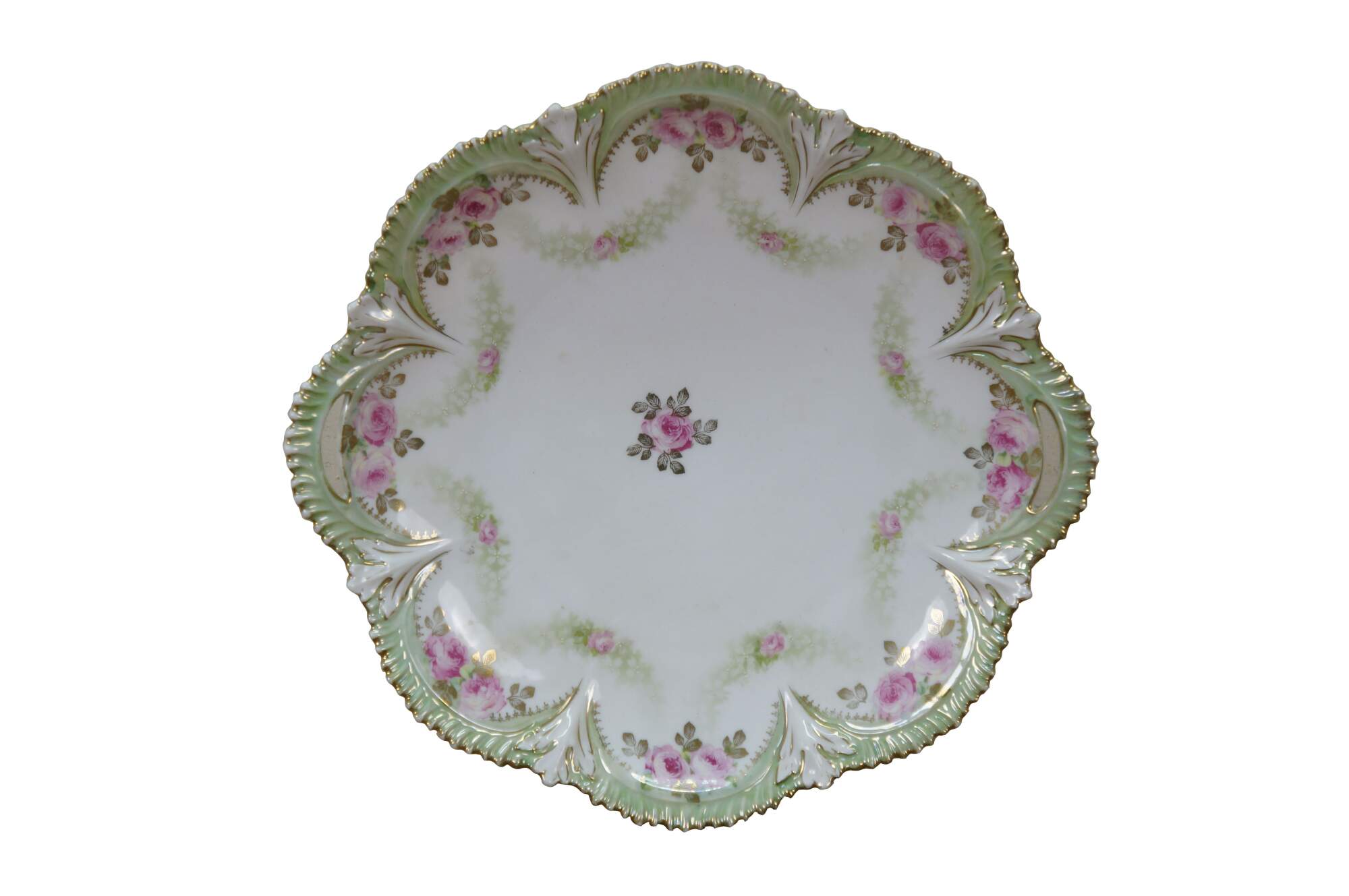
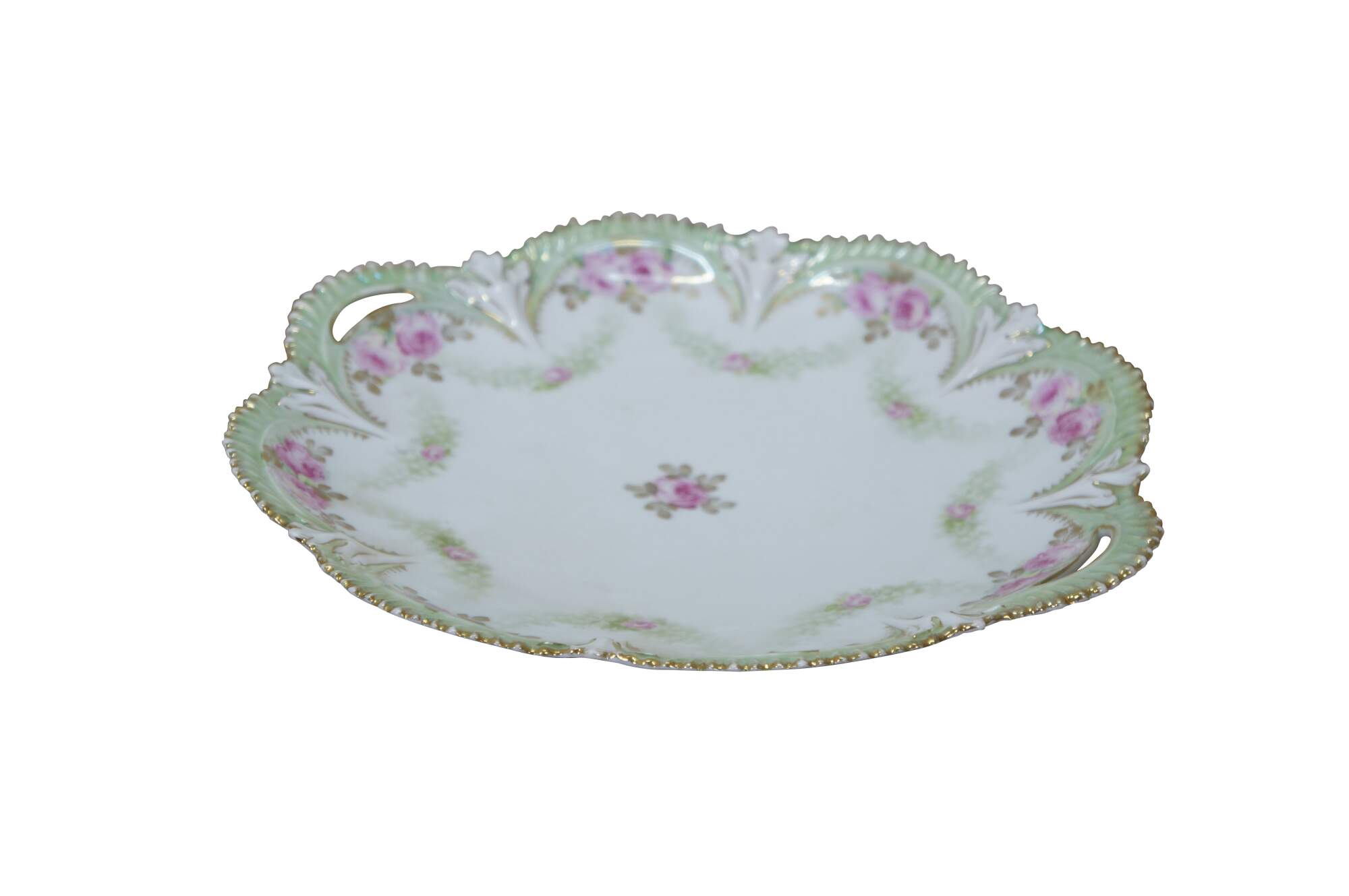
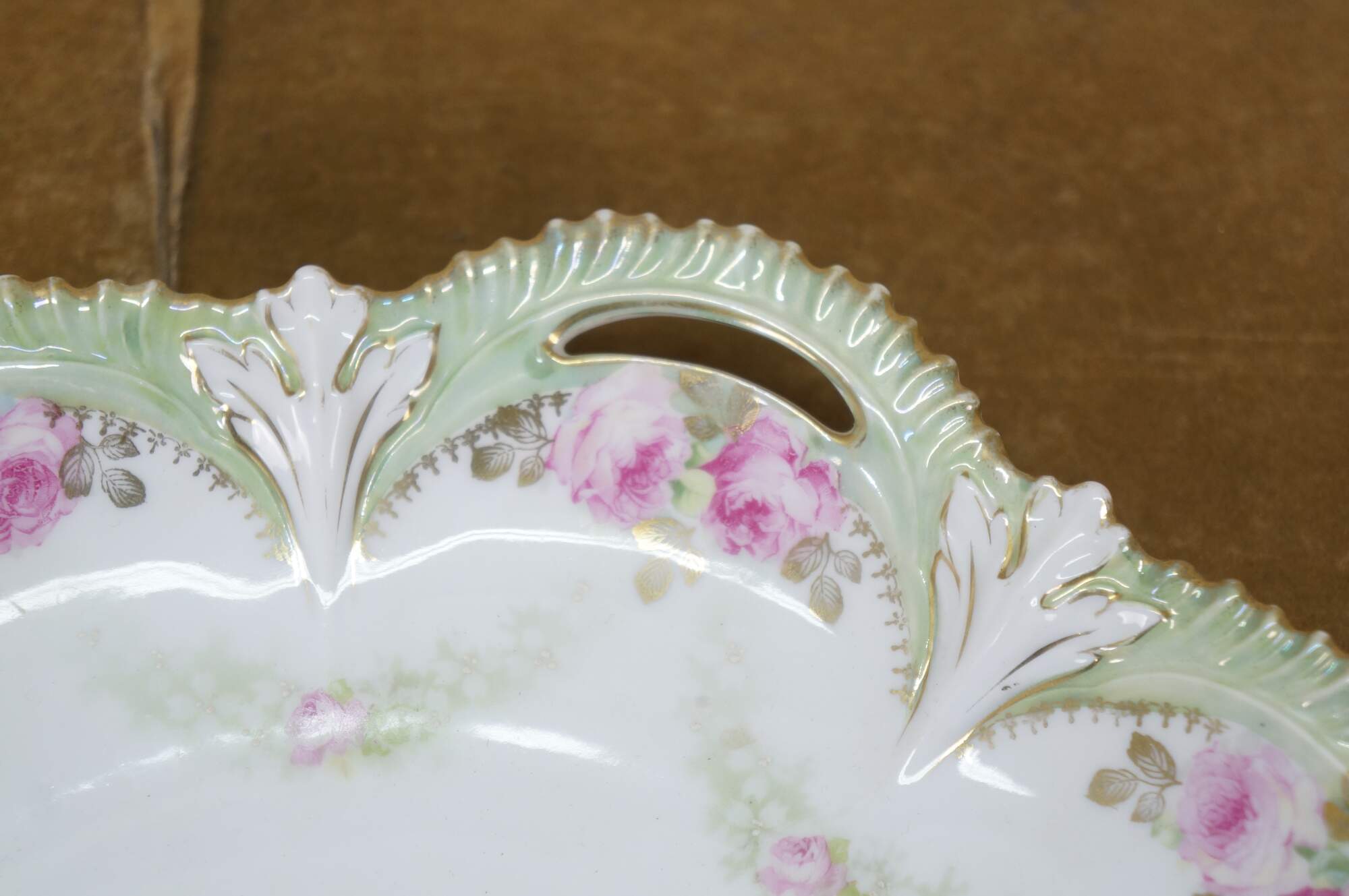
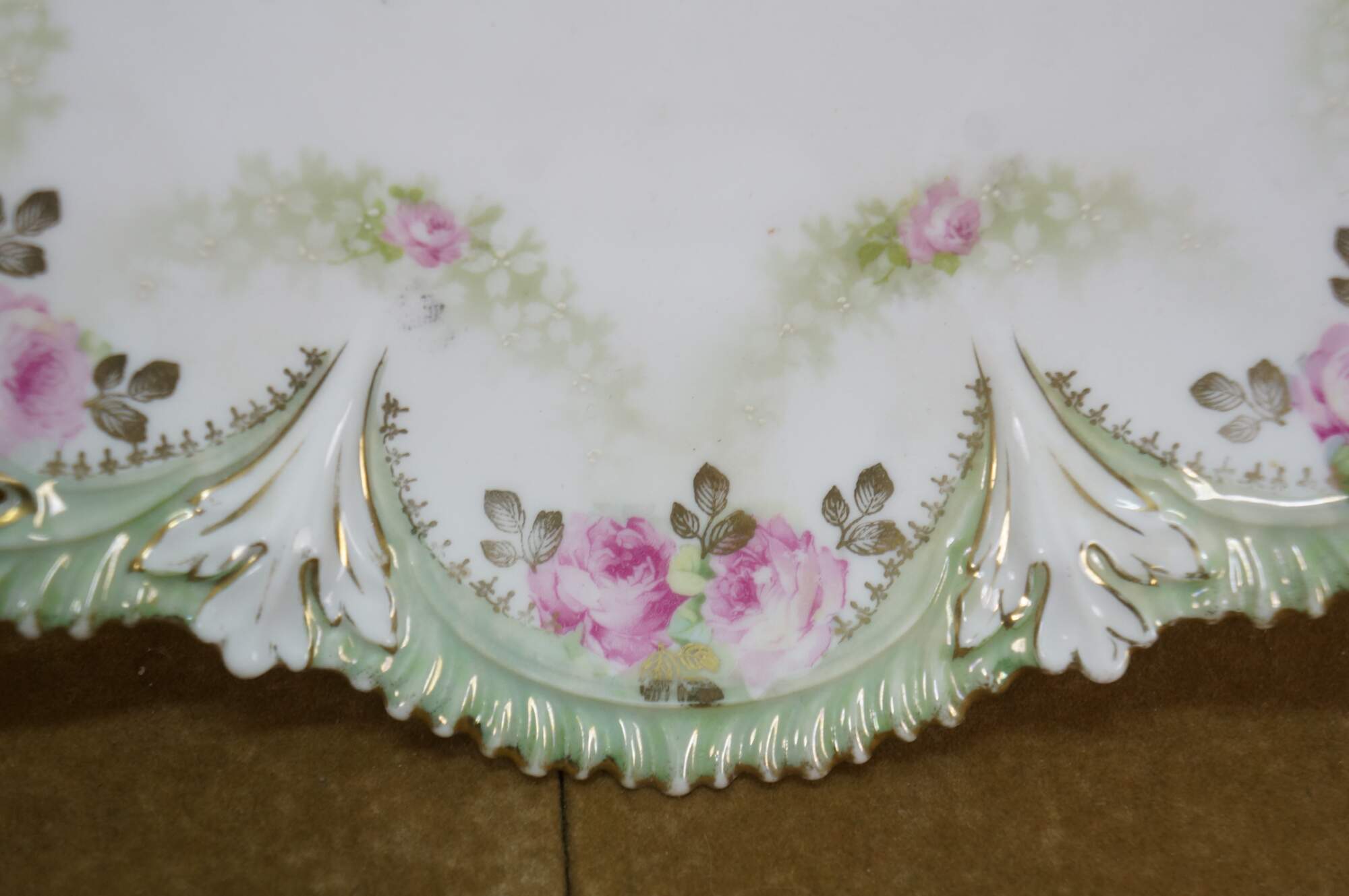
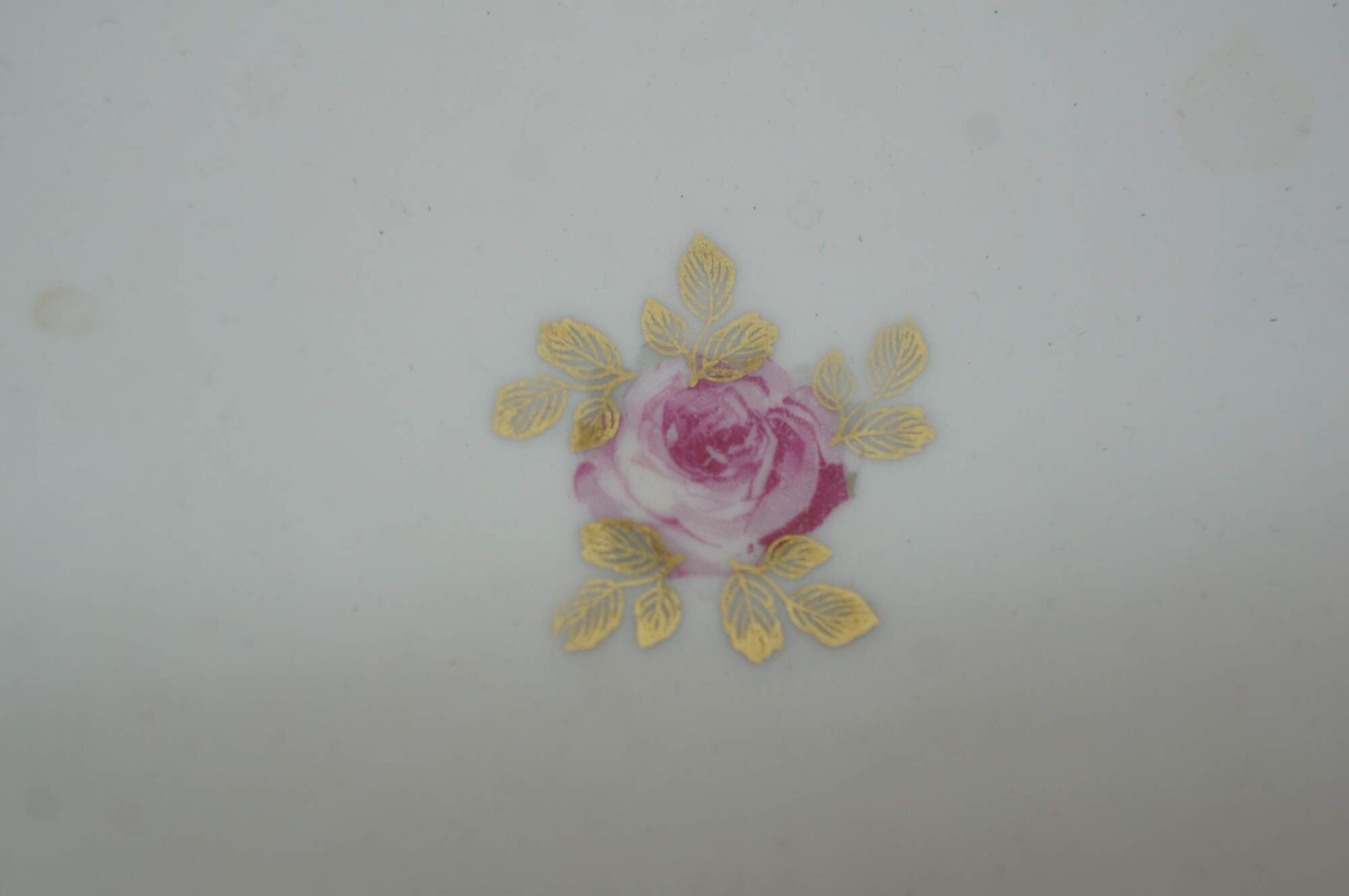
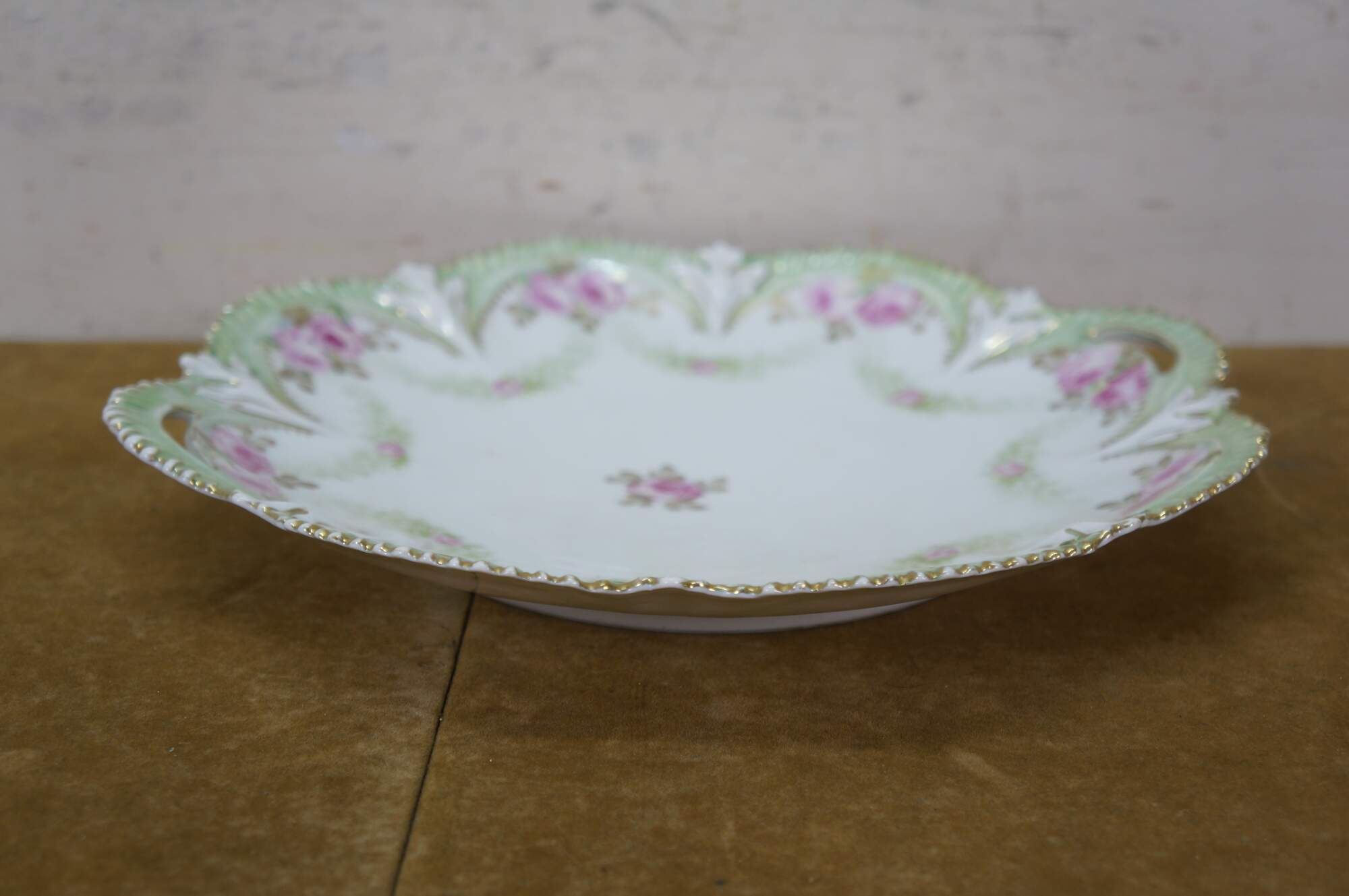
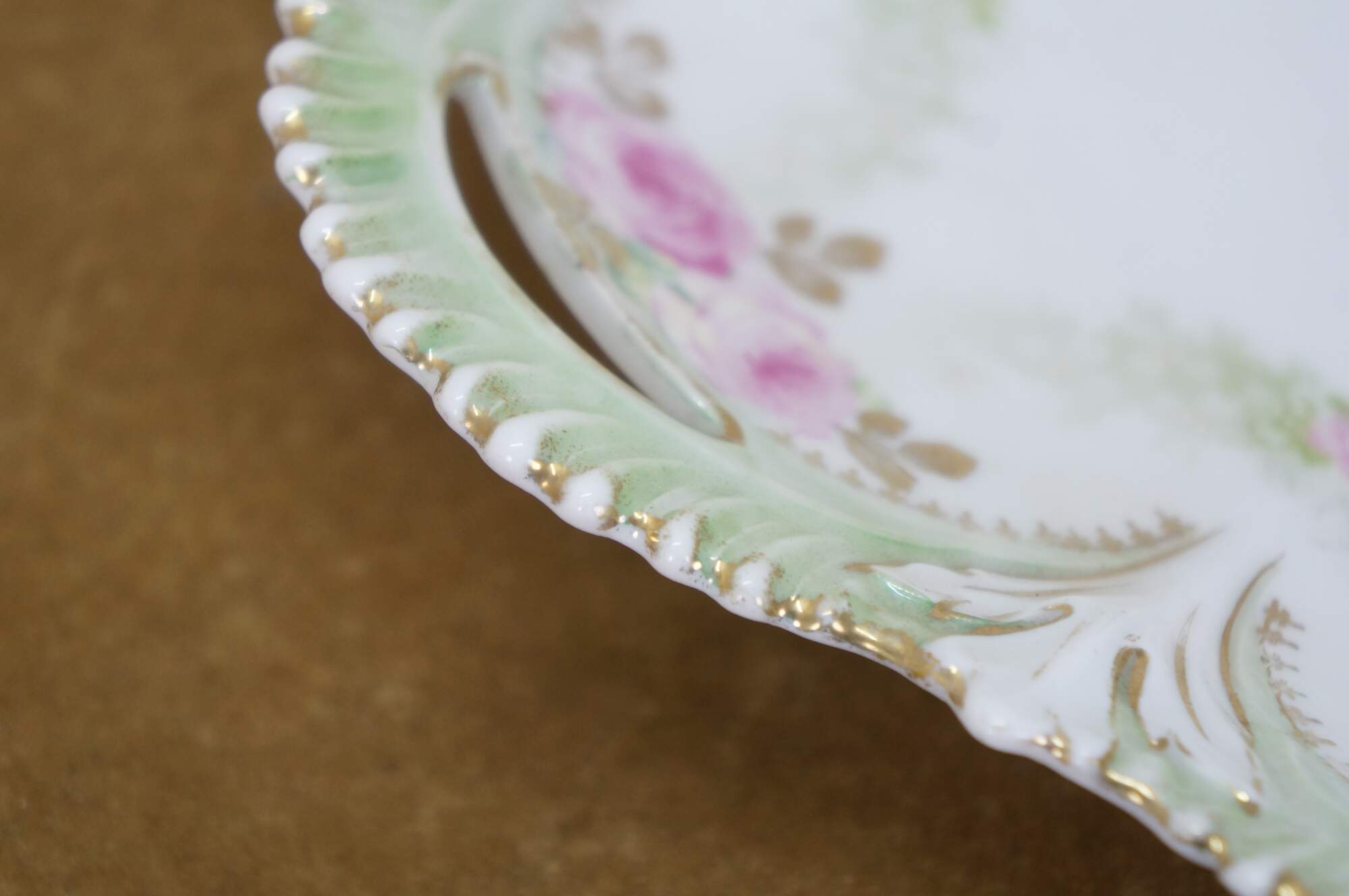
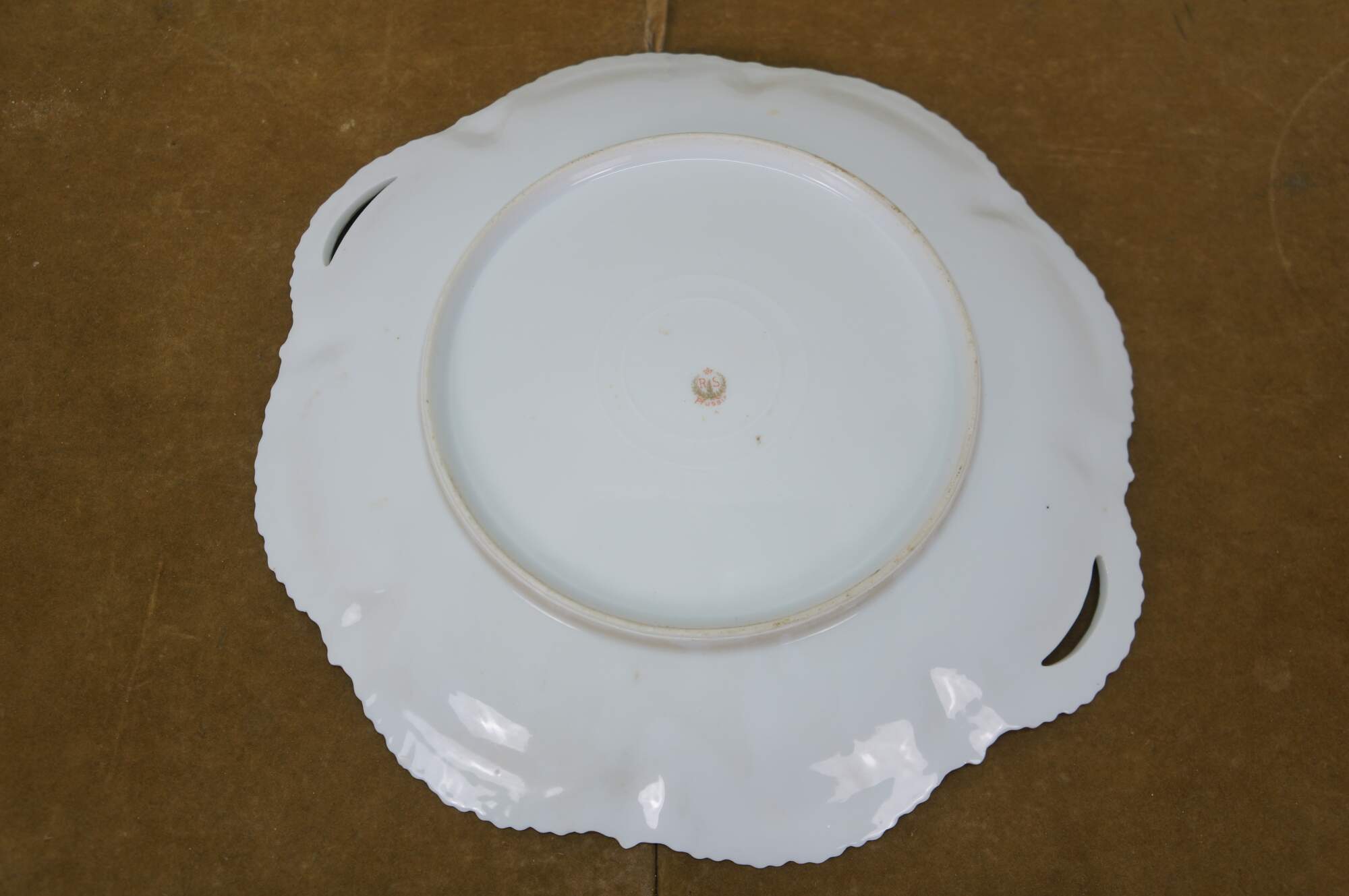
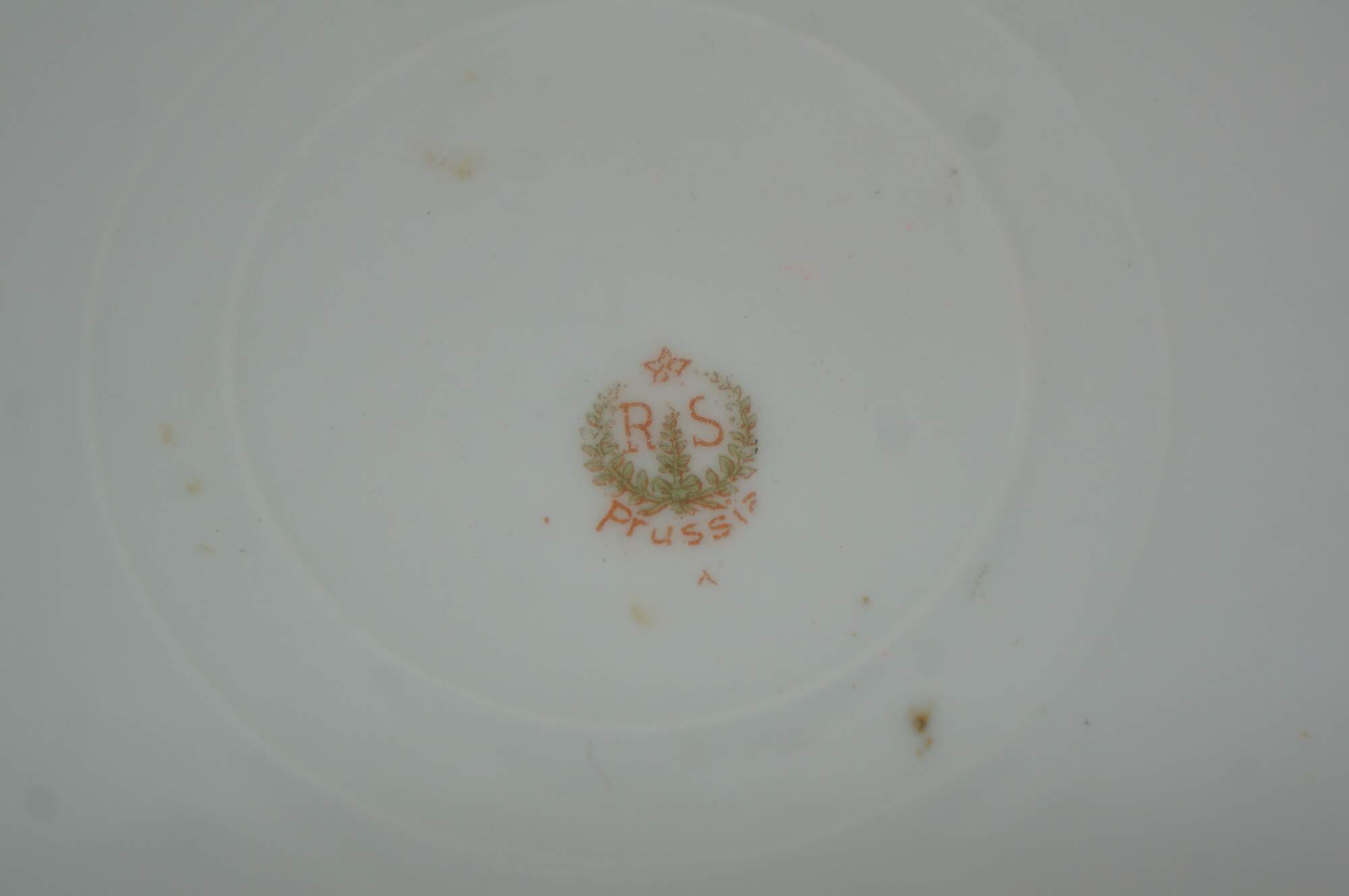
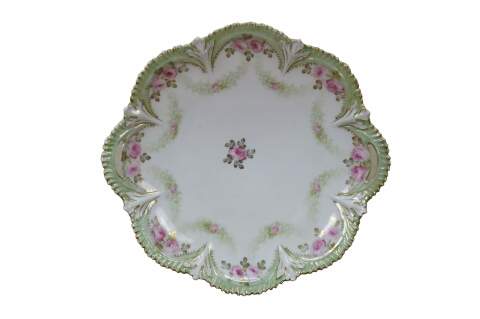
Late 19th to early 20th century porcelain serving plate / dish by RS Prussia. Round scalloped edge platter with two pierced handles, decorated with a soft green edge and swags of pink roses trimmed with gilt.
"RS Prussia was founded in 1896 by Reinhold Schlegelmilch, and later co-owned with his two sons, Ehrhard and Arnold. (Between 1861 and 1882 there were three porcelain factories started in the city of Suhl (in what is today Germany, then Prussia) by persons with the last name Schlegelmilch. Erdmann S. in 1861; Reinhold S. in 1869 and Carl S. in 1882. Until recently, it was thought all the Schlegelmilchs were family related. They were not.) From the time of founding up to 1892, it appears that little porcelain was exported to America from Reinhold's factory. Objects in several mold patterns used between 1889 and 1892 are known to be marked with the RS "Arrow" mark. Beginning 1893, US wholesale firms began to import larger quantities of china tableware from Europe, and almost all was from Reinhold's factory. Arnold took over an existing porcelain factory in Tillowitz in 1894, and continued to run it as part of the Reinhold Schlegelmilch enterprise until he died in 1934. From approximately 1895-1900 that the R. S. "Wing" trademark was used. Reinhold's products from the 1900-1905 period were noted as being among the best to be made in Europe. Unfortunately, public taste began to change about 1905. By 1910, simple shapes predominate in all catalogs, wholesale and retail, and Reinhold's products were largely replaced by china from both Japan and other European firms. Reinhold's products made after 1910 are frequently referred to as R. S. Germany, owing to a change in trademark. When the hostilities of WWI began in earnest, the Suhl factory was effectively shut down, owing to a lack of skilled labor. The manufacture of porcelain in Tillowitz continued through WWII. Although the plant survived undamaged, much of the equipment used to make porcelain was removed upon Russian occupation. Today, the factory still stands, but the major product is china dinnerware." (Source: RS Prussia / Real or Repro / Kovels)
Condition
Good Overall - Gentle wear
Dimensions
11" x 1.5" (Diameter x Height)