

Shipping:
Free Shipping Included
Delivery:
Estimated 2-15 Business Days
Payments:
Credit Card, Check, Cash, PayPal, Apple Pay, Venmo
Returns:
30 Days 100% Money Back Guarantee, Buyer Pays Return Shipping
Description
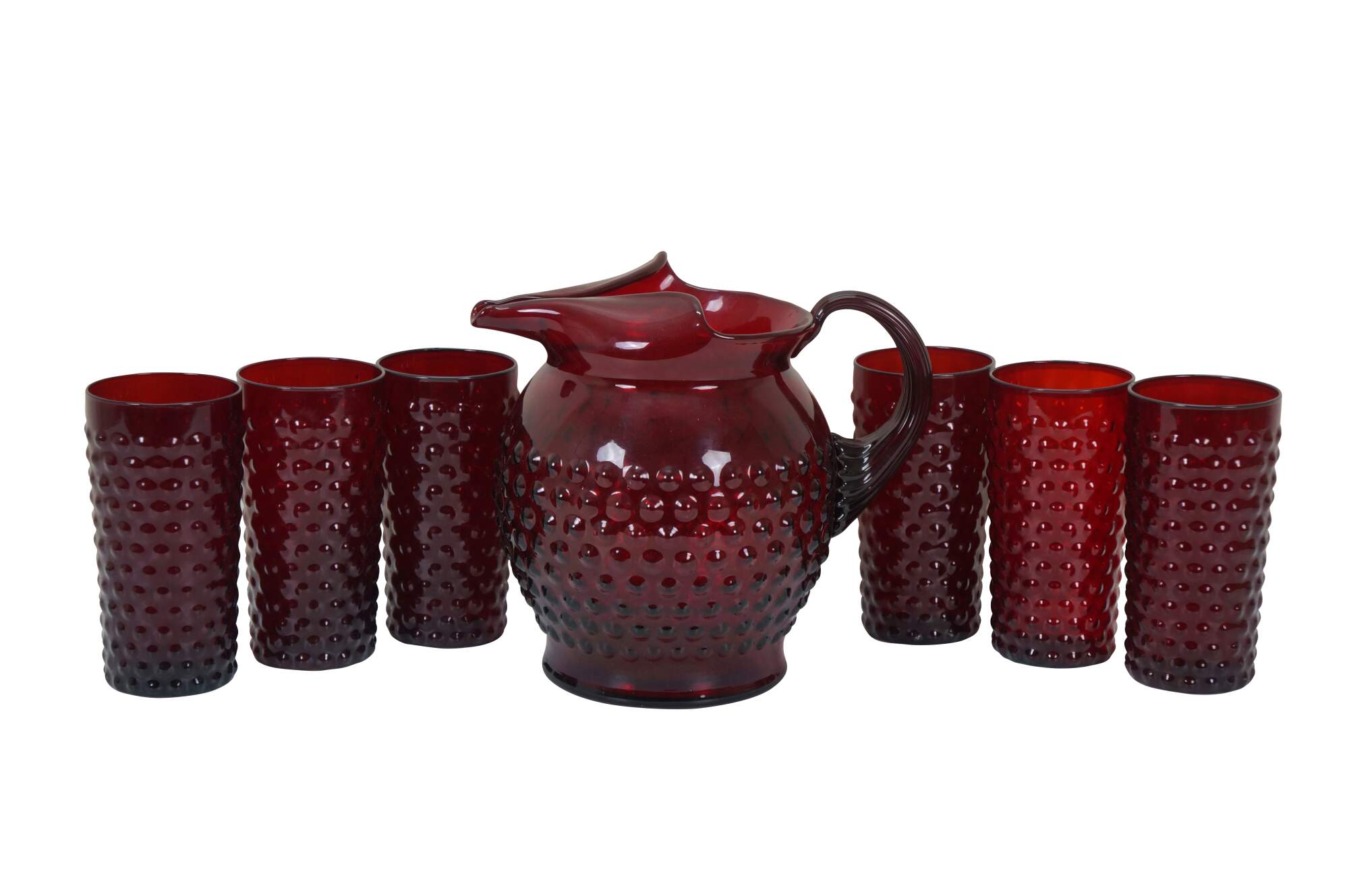
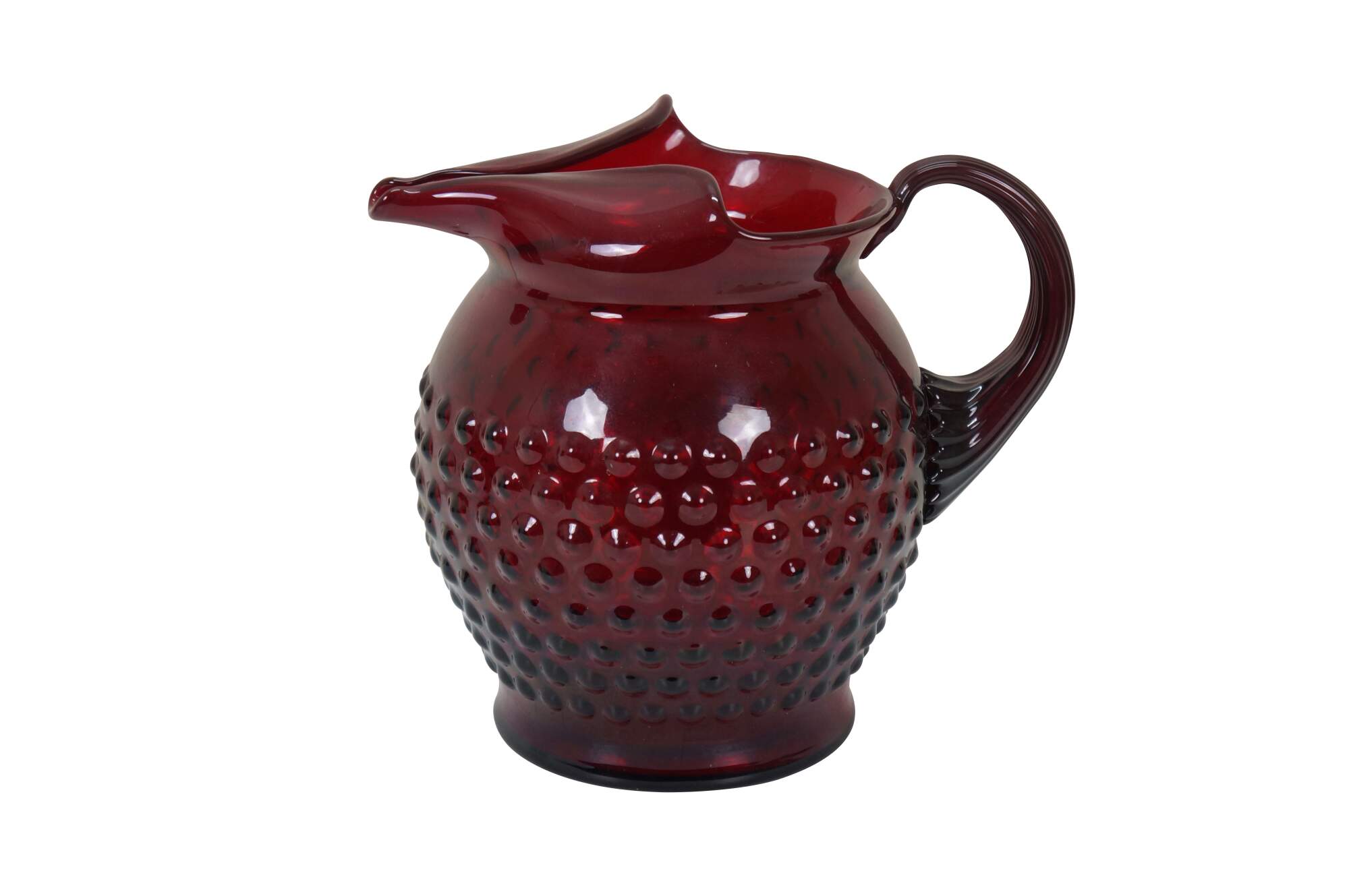
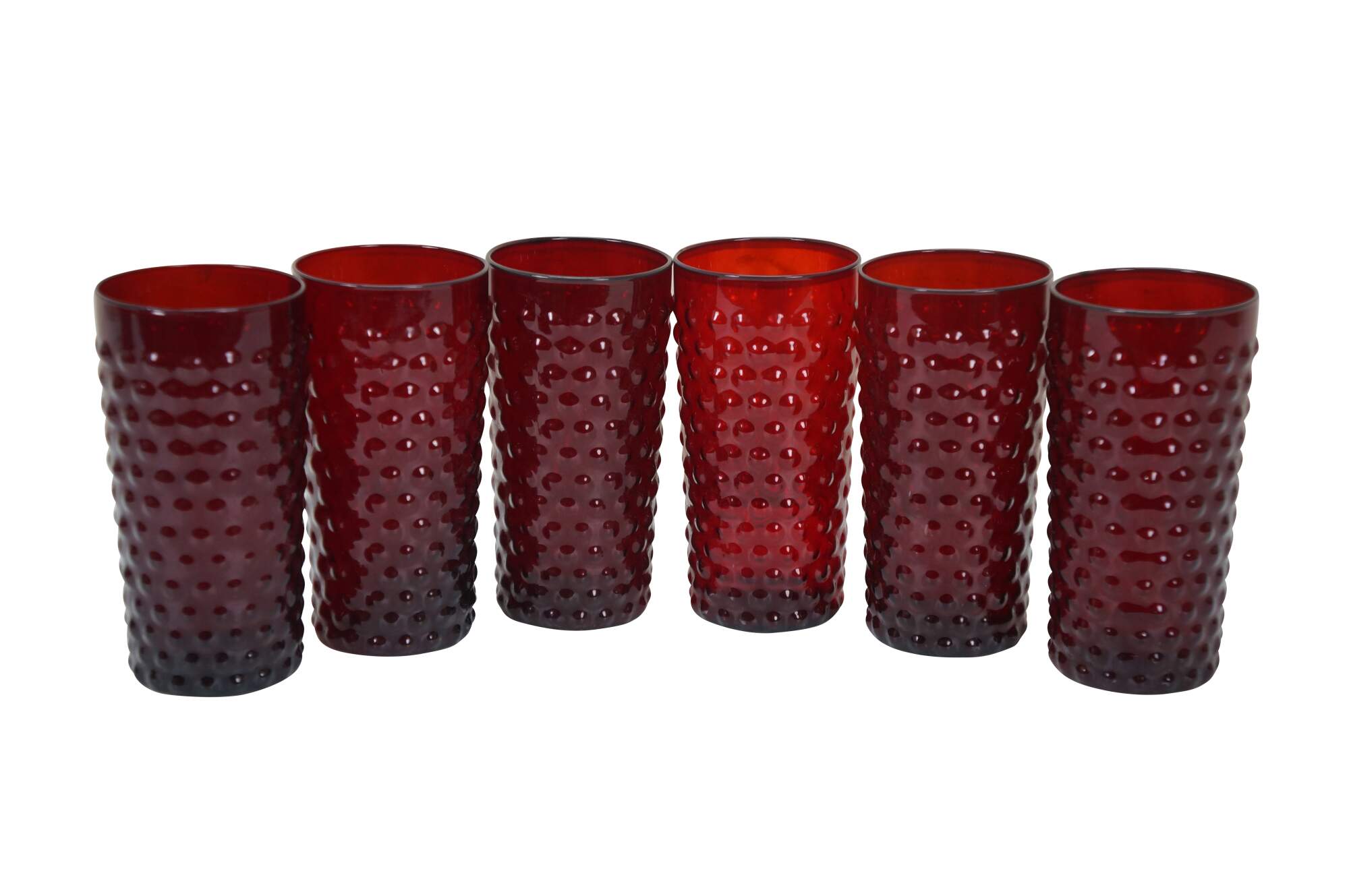
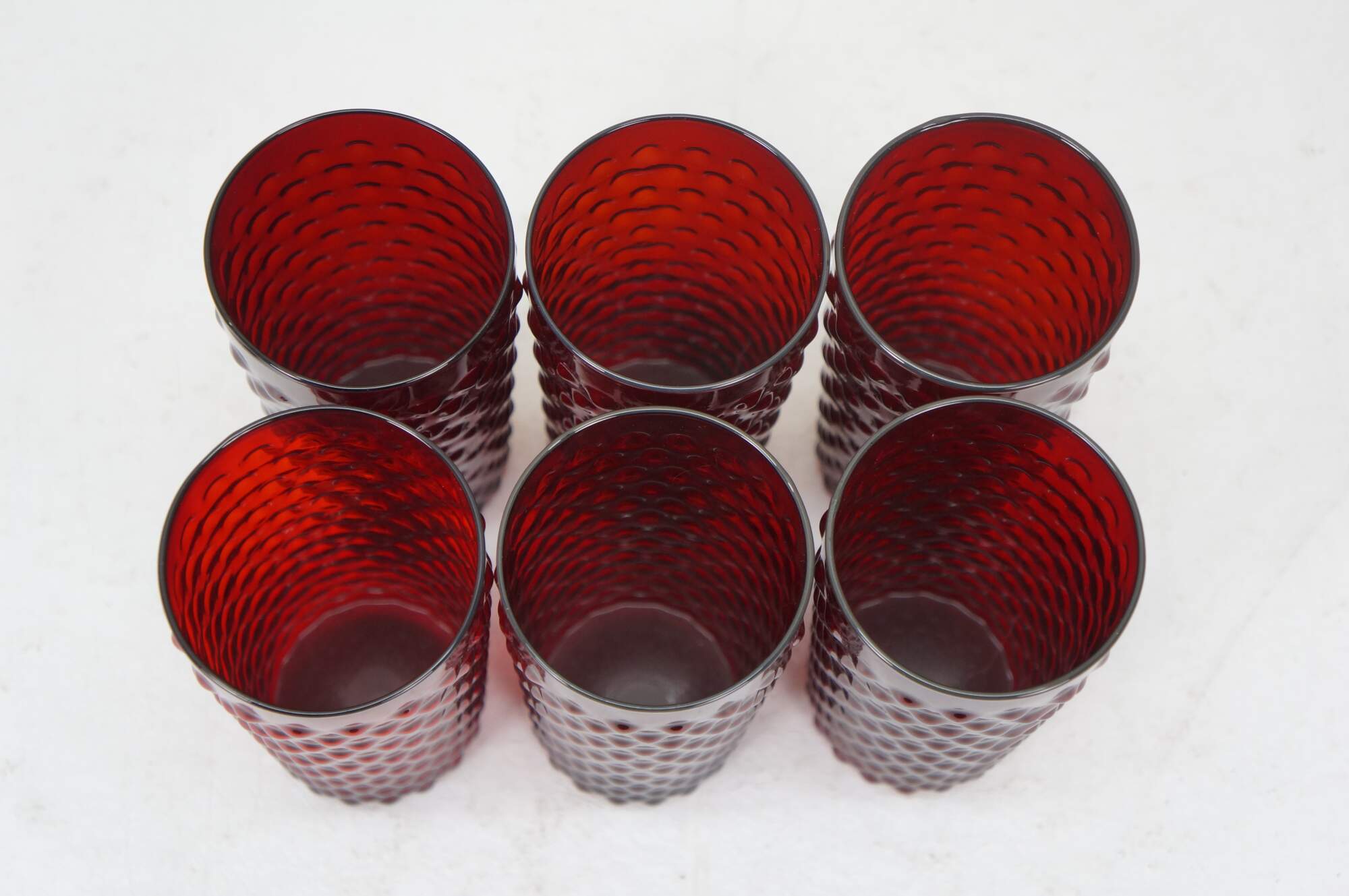
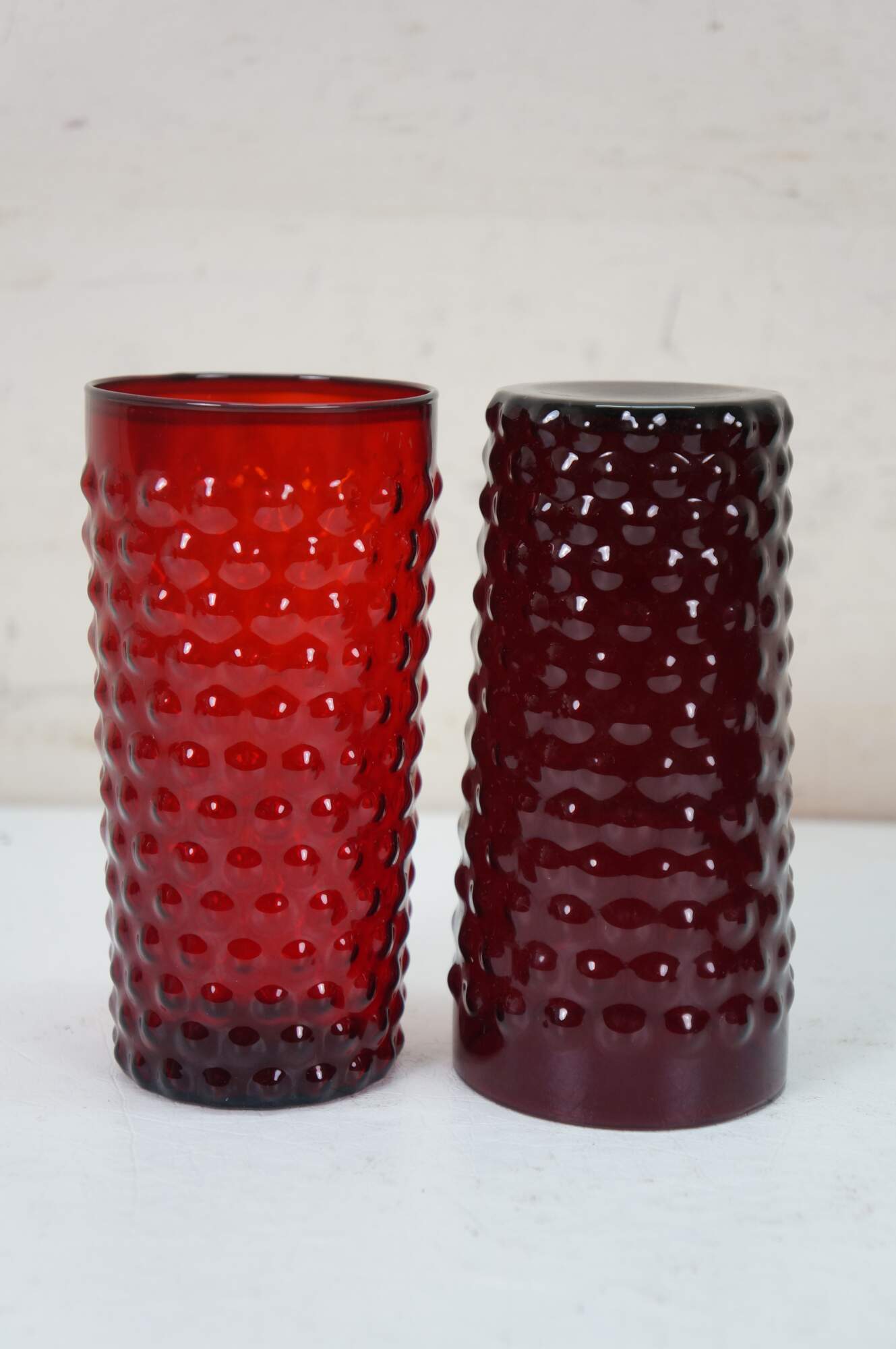
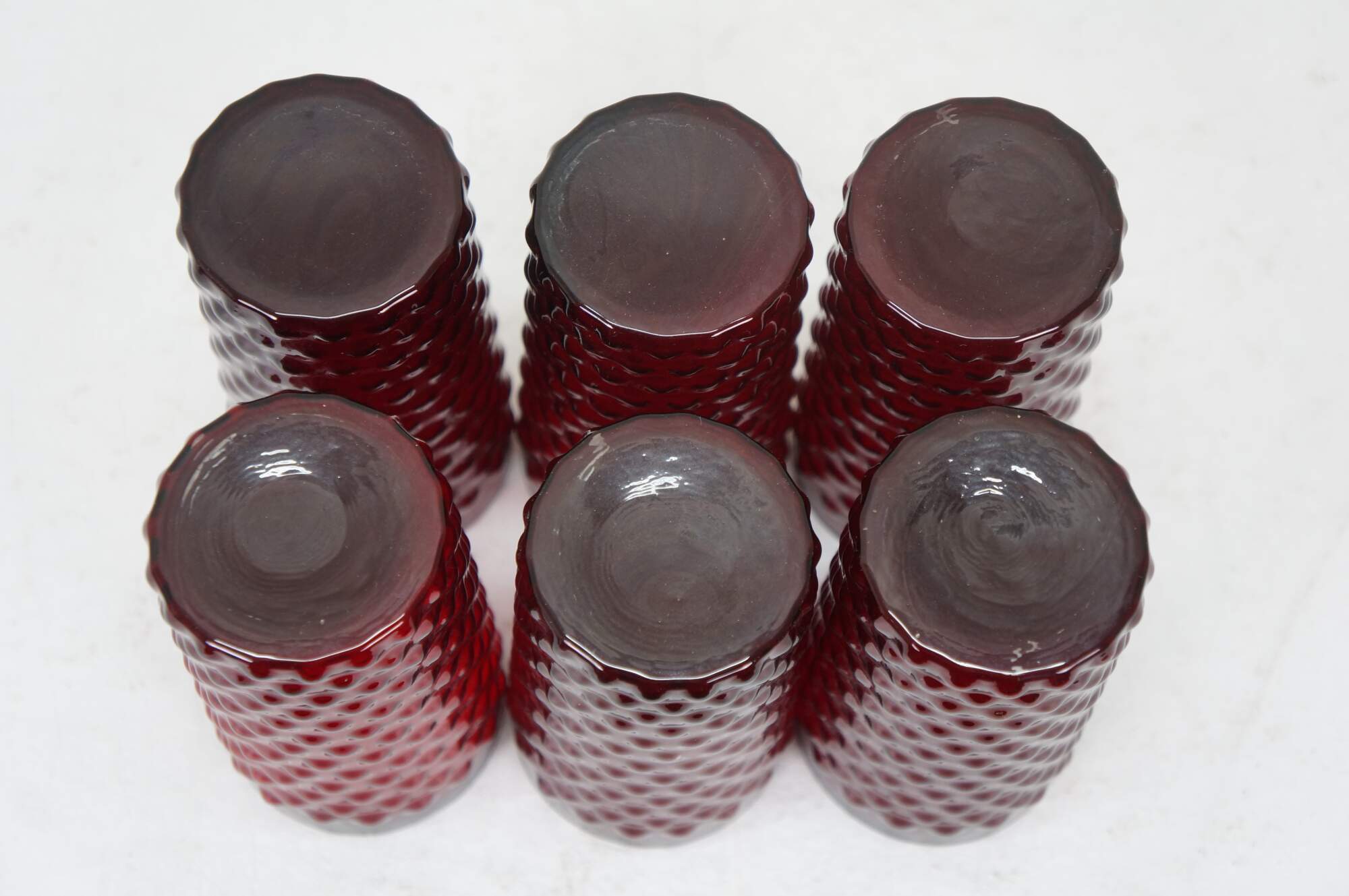
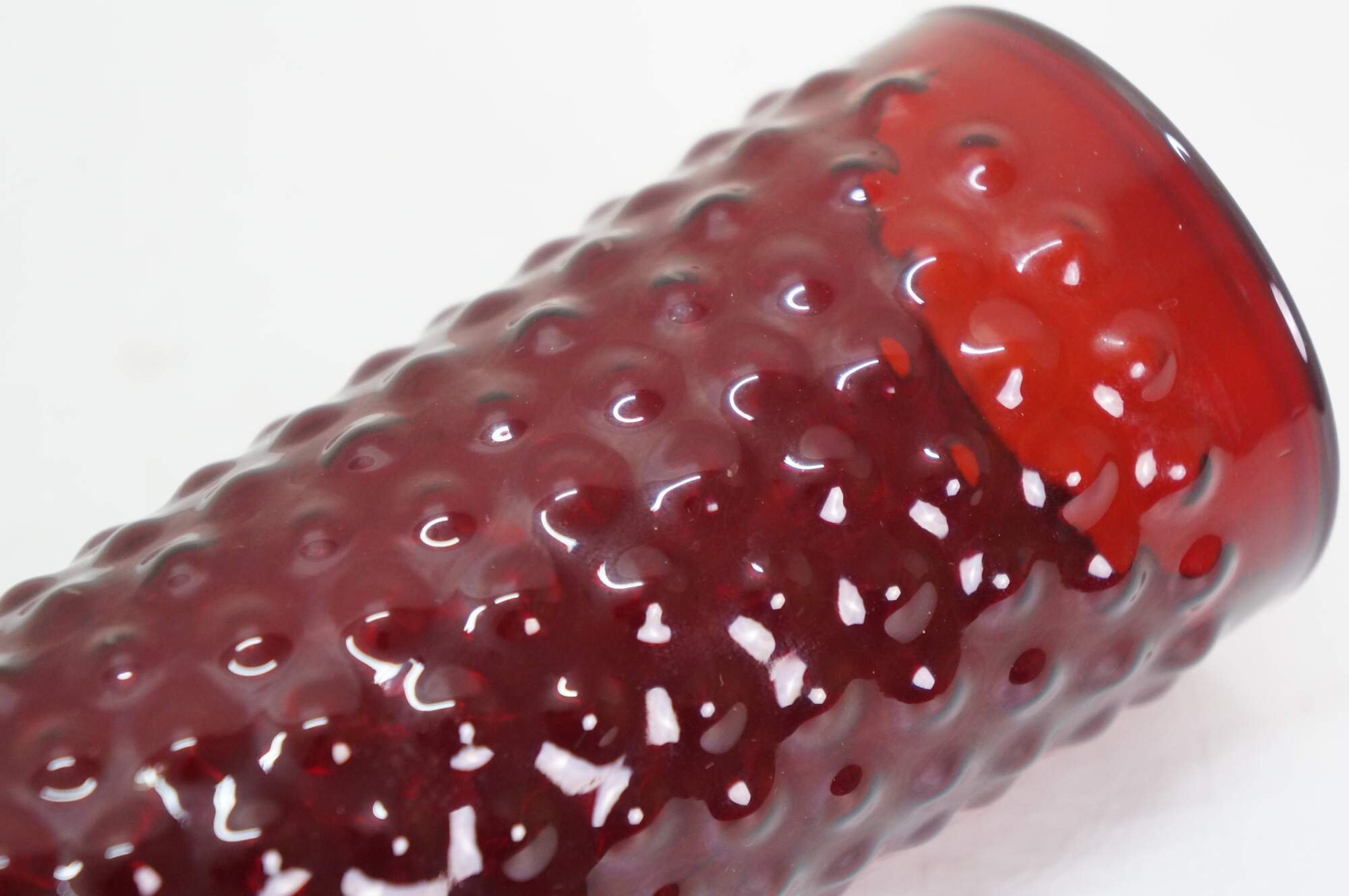
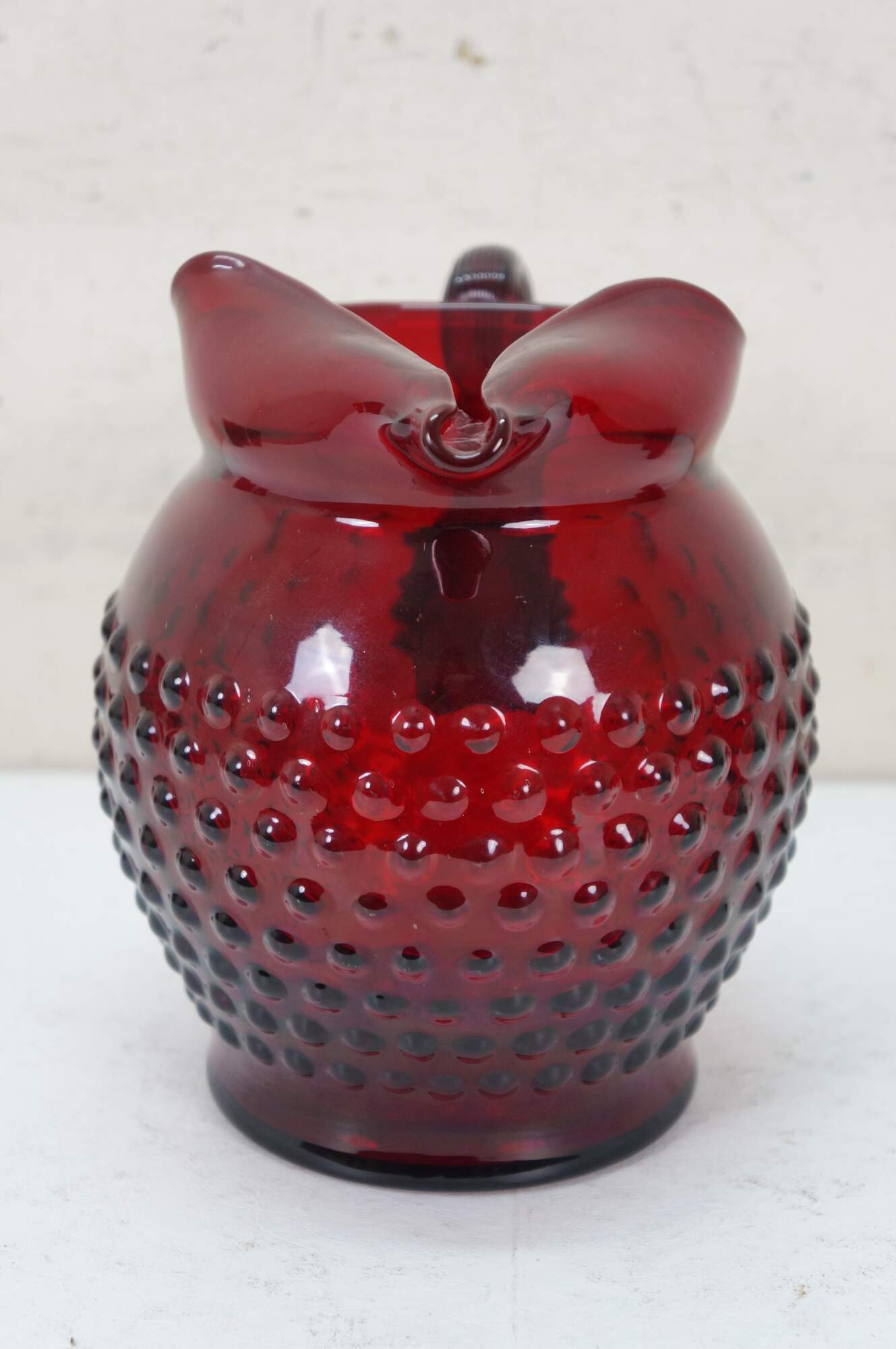
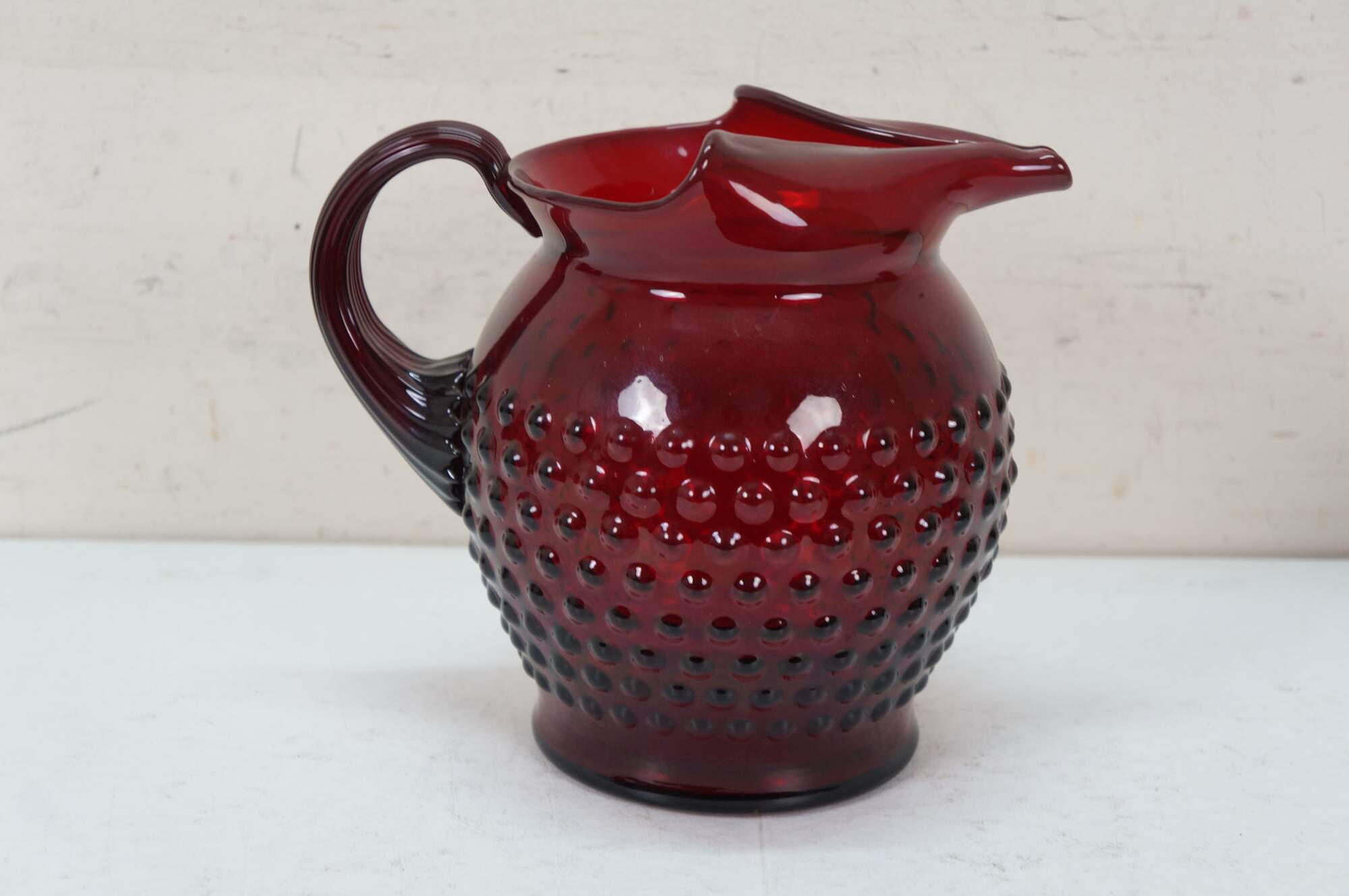
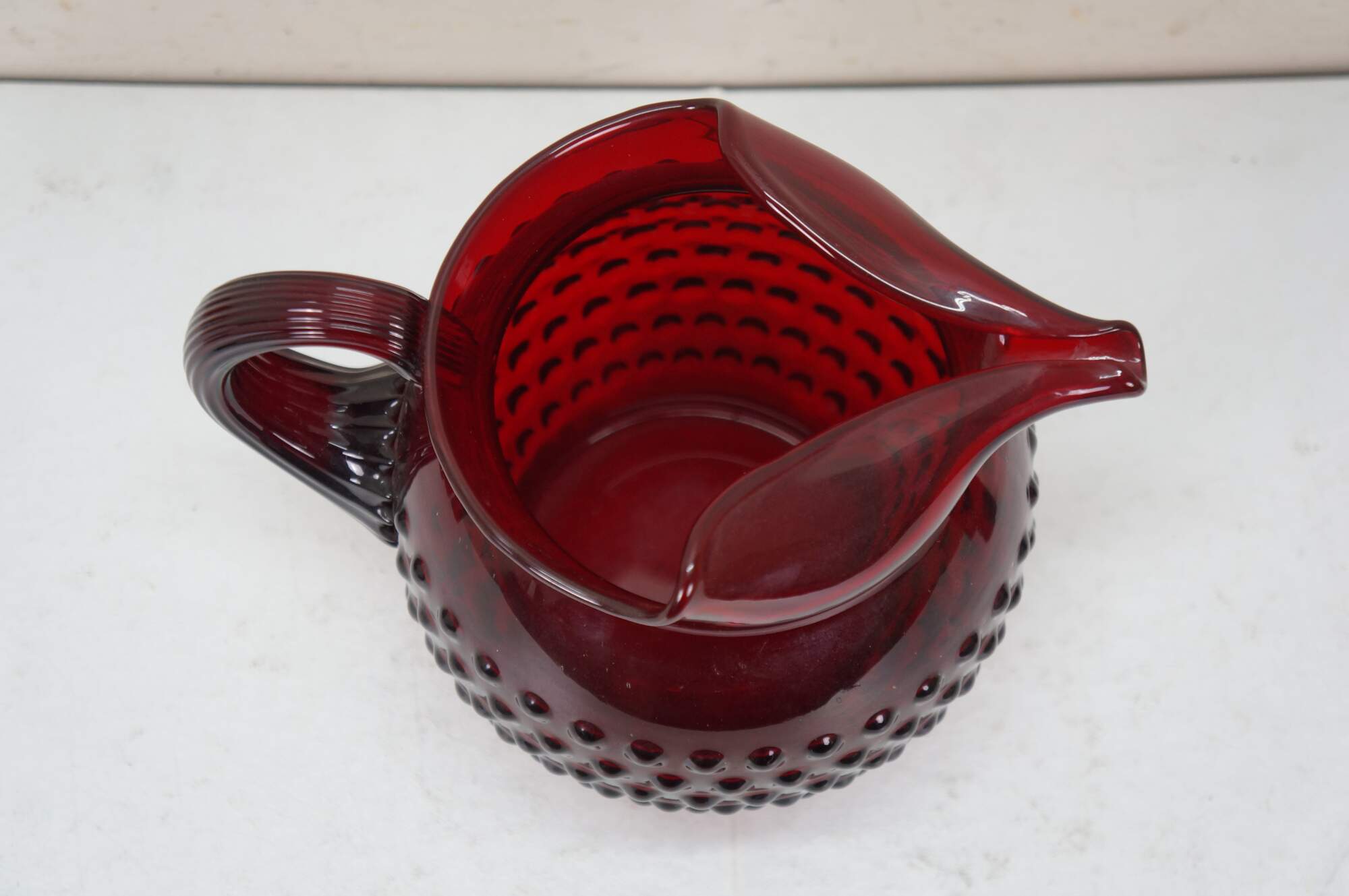
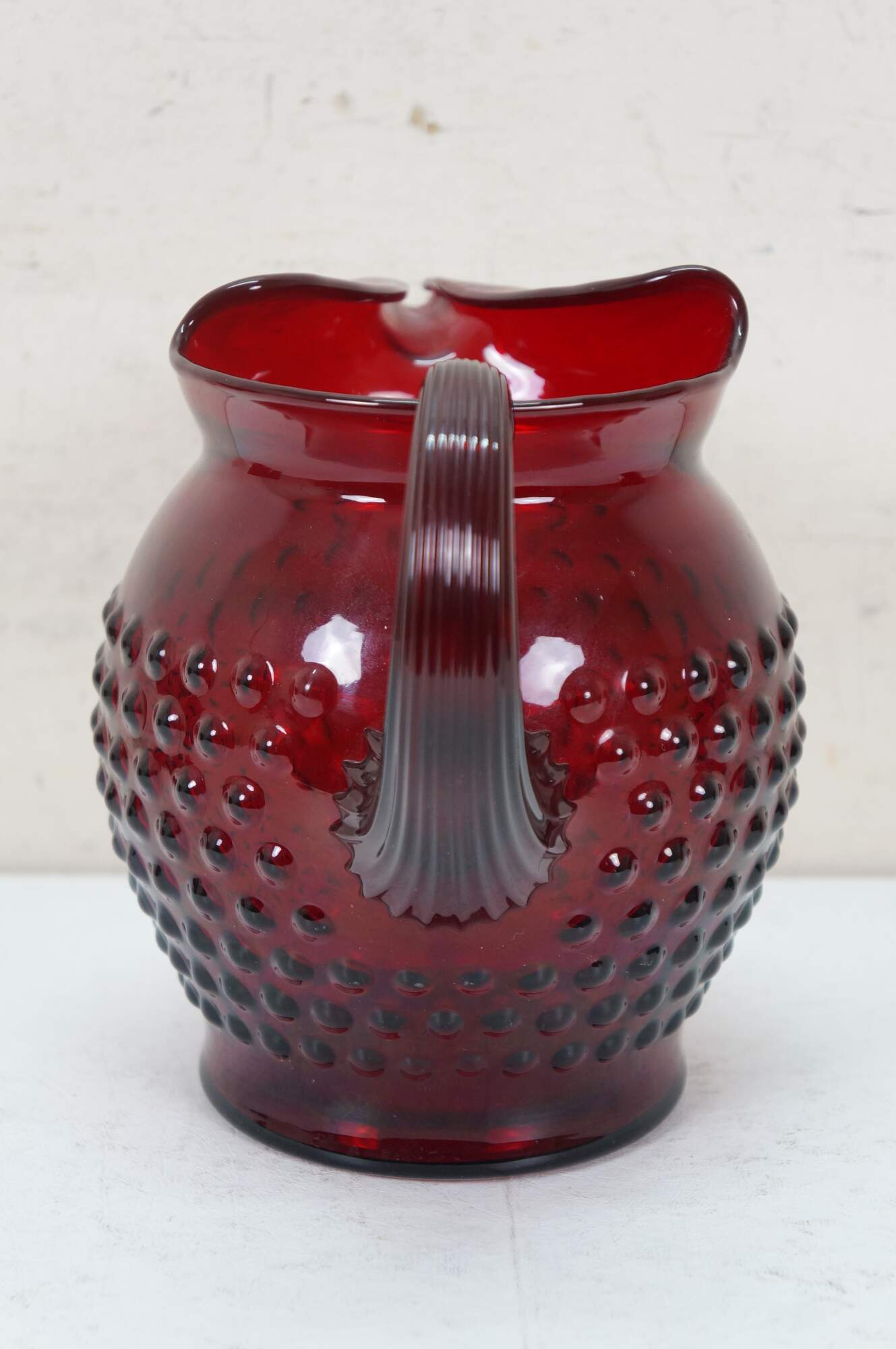
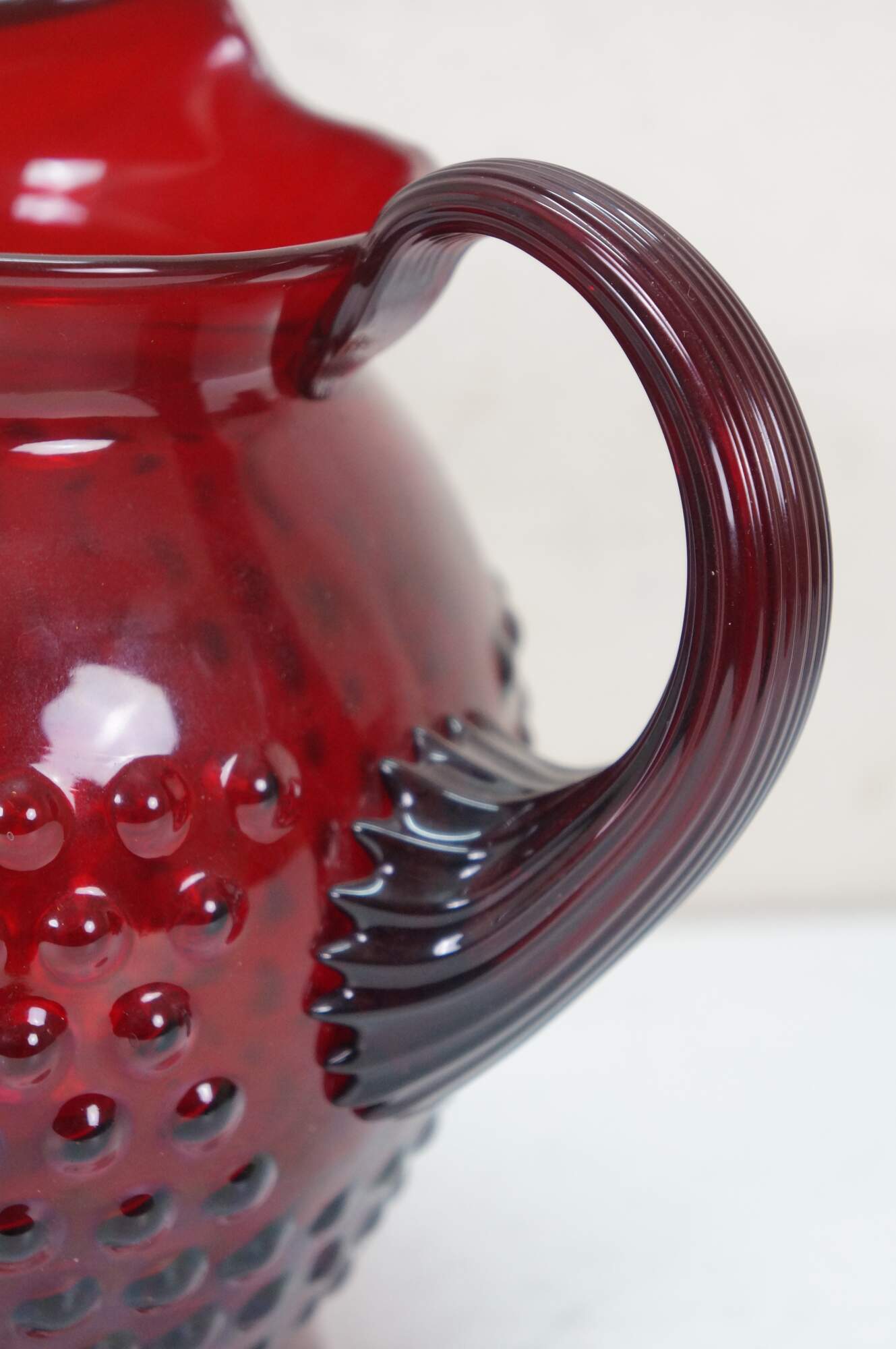
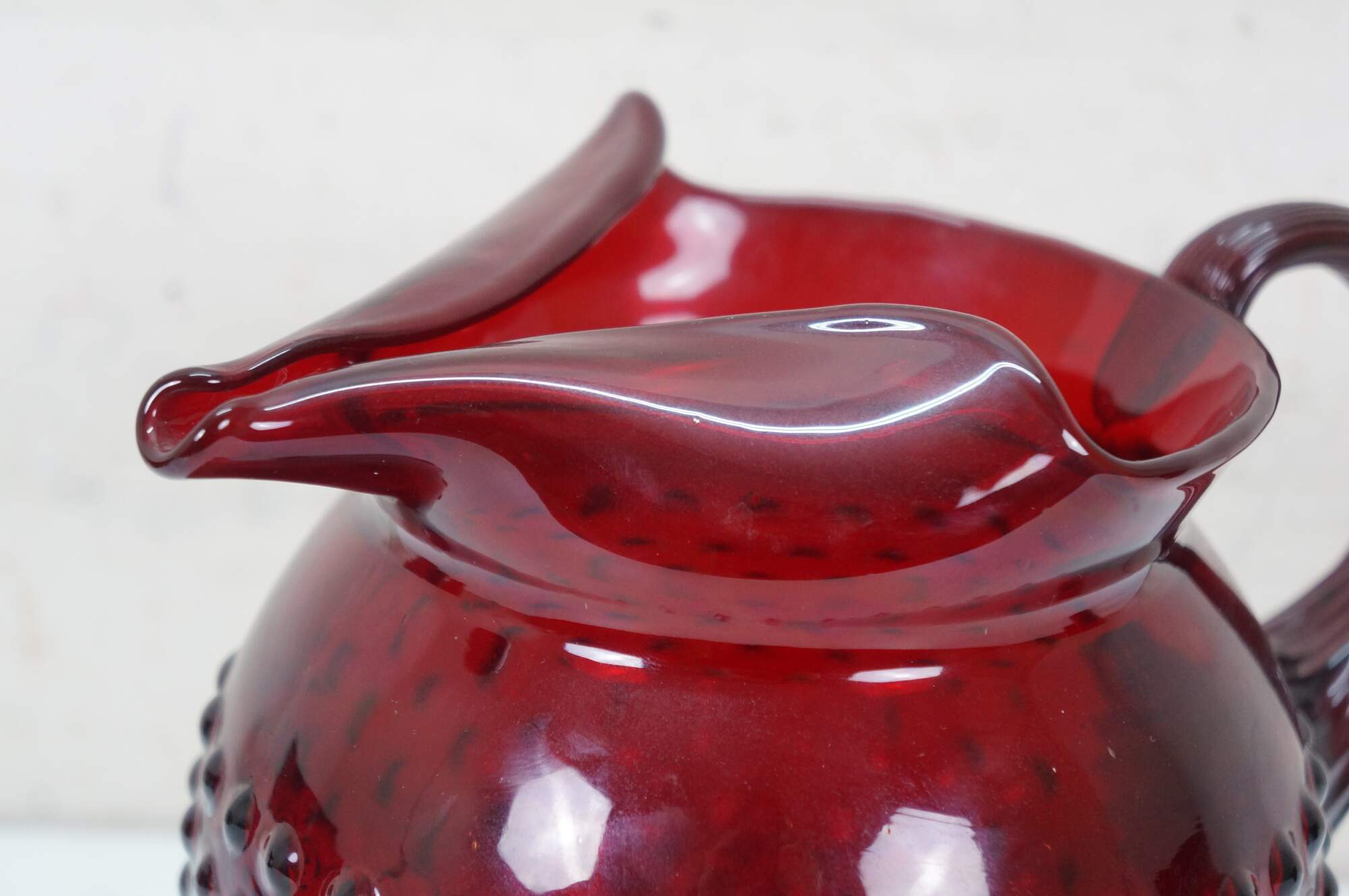
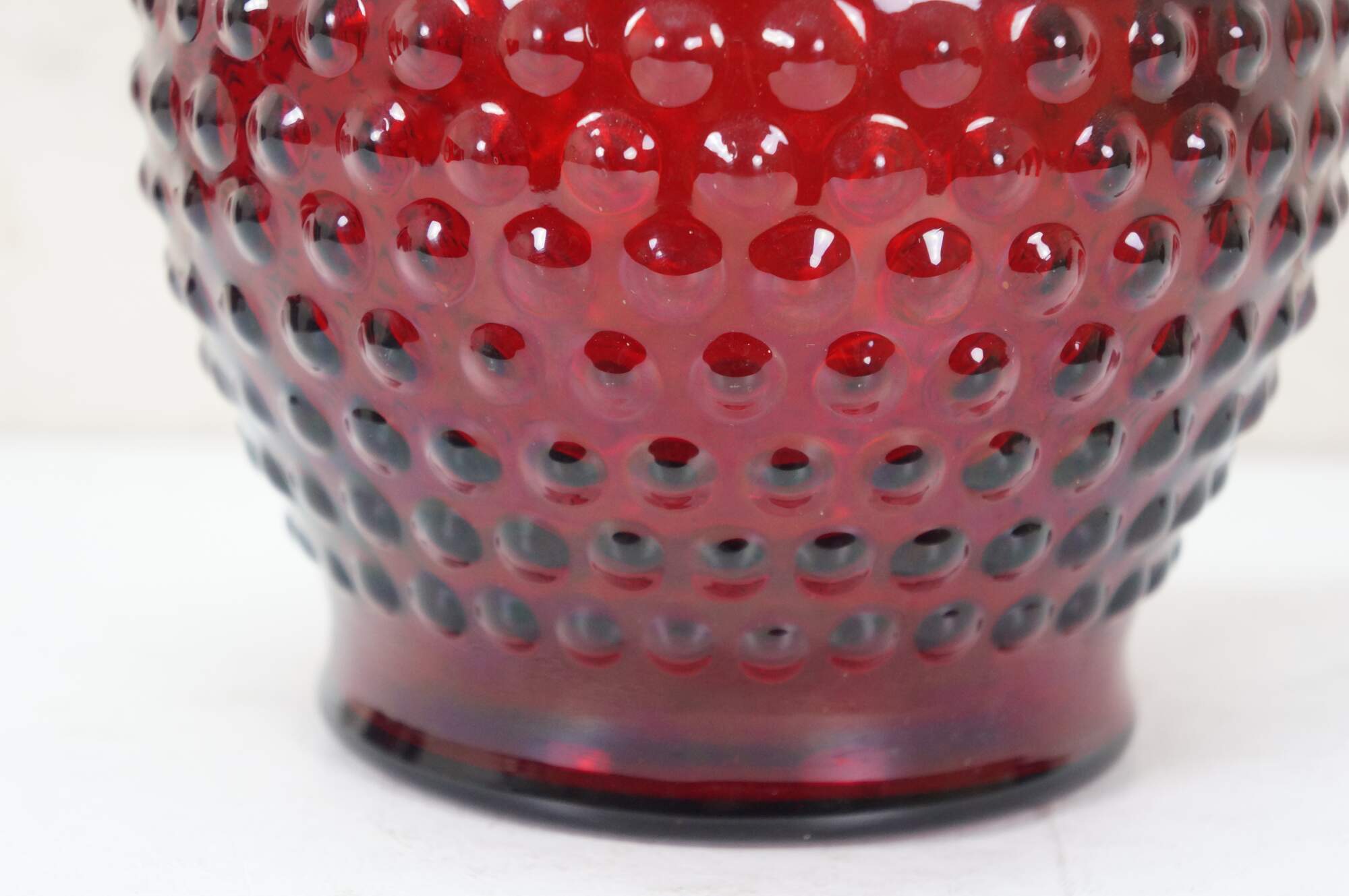
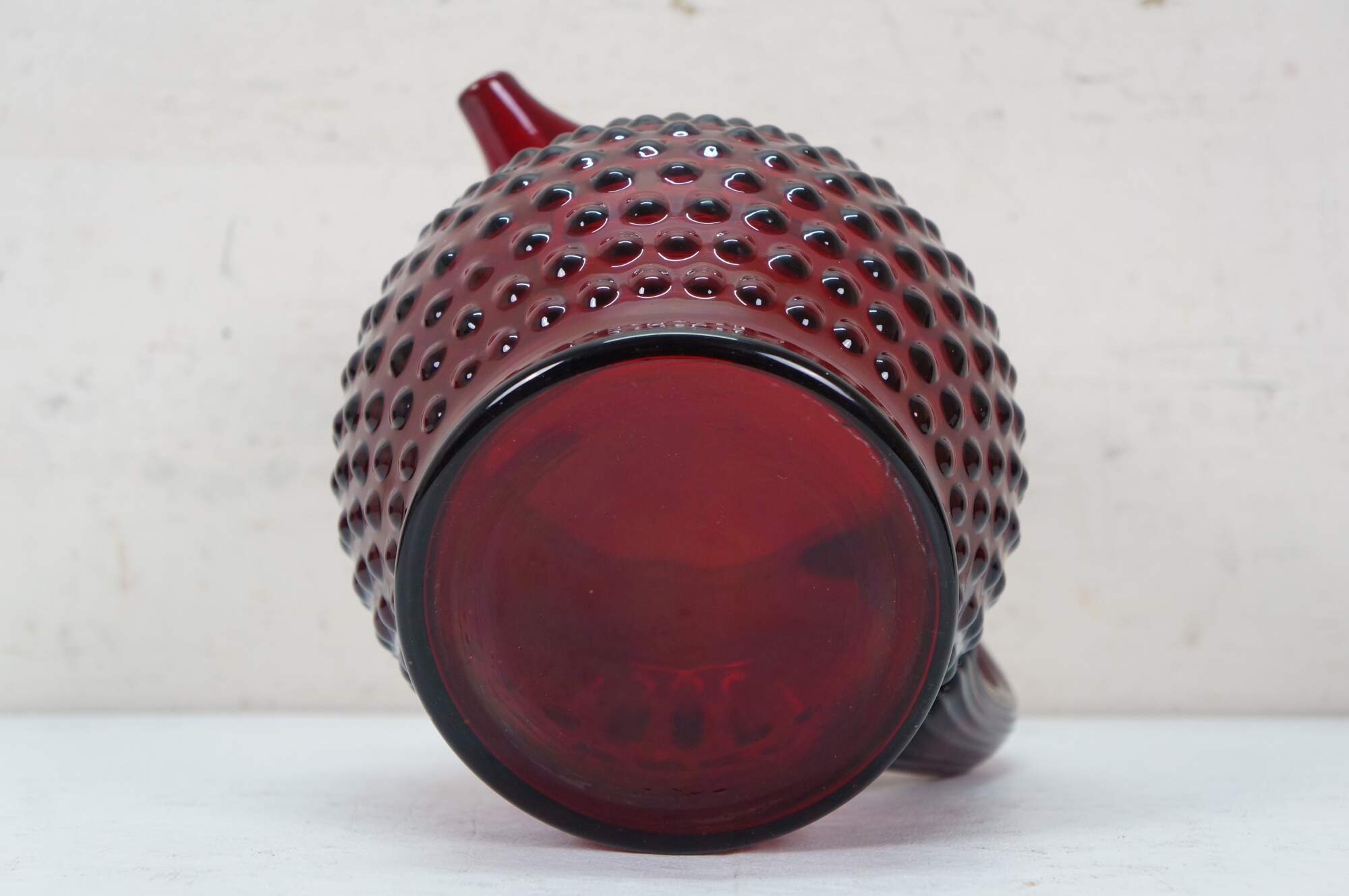
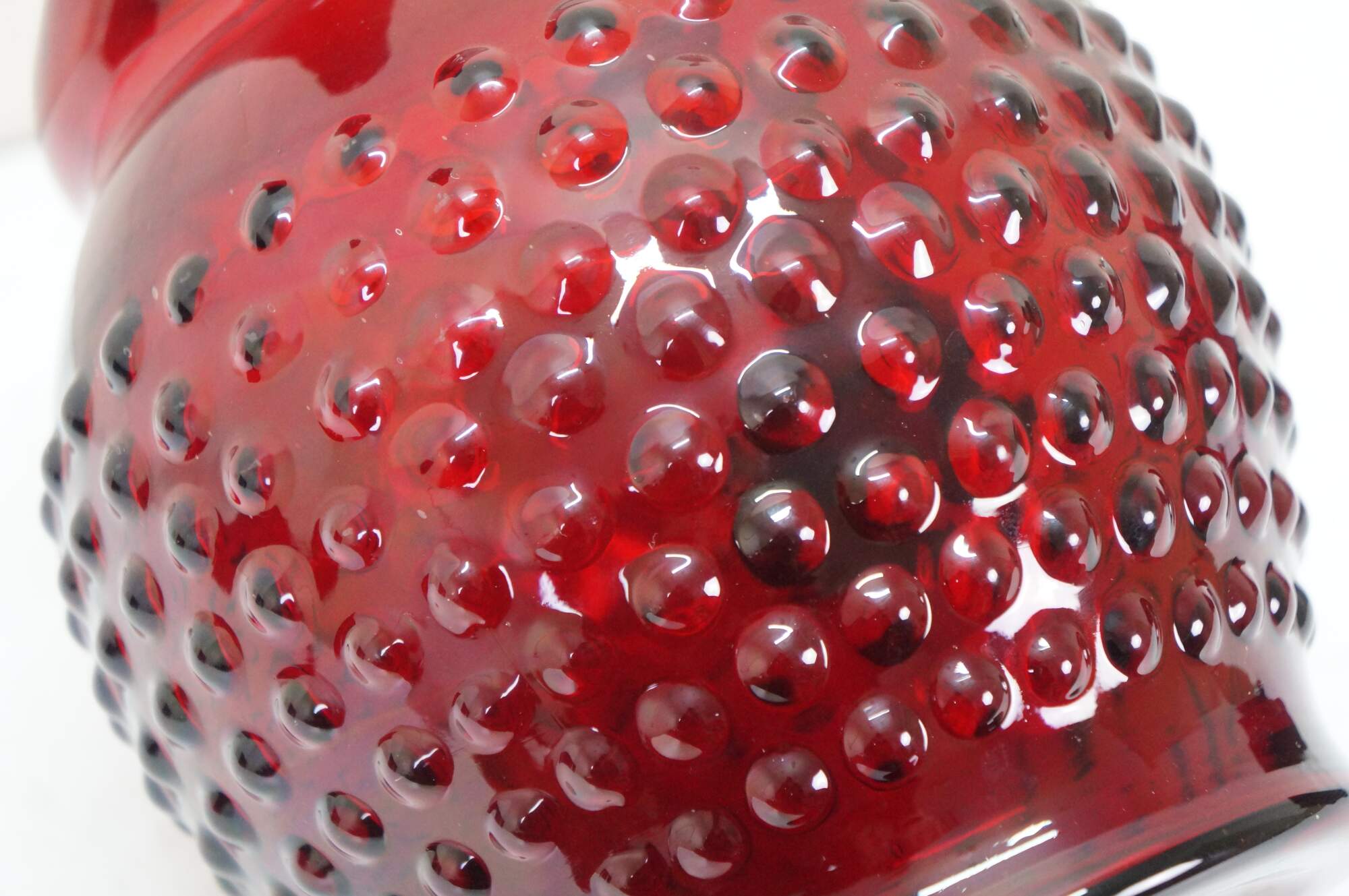
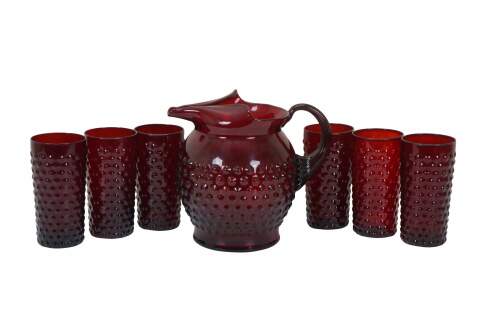
20th century ruby red hobnail glass drink pitcher and tumbler set. Includes six cylindrical tumblers and squat pitcher with rigid handle and folded ice catching spout. Attributed to Anchor Hocking.
"Anchor Hocking first came into existence when Isaac J. Collins (who had been working in the decorating department of the Ohio Flint Glass Company) purchased the Lancaster Carbon Company, Lancaster, Ohio, when it went into receivership in 1905. He did so with the investment of six friends and Mr. E.B. Good., and began operations as the Hocking Glass Company. The company's facility was known as the Black Cat from all the carbon dust. Within the first year they expanded production, funded by the sale of stock to Thomas Fulton, who was to become the Secretary-Treasurer. In 1924 the Black Cat was reduced to ashes by a tremendous fire. Mr. Collins and his associates were not discouraged. They managed to raise the funding to build what is known as Plant 1 on top of the ashes of the Black Cat. This facility was specifically designed for the production of glassware. Later in that same year, the company also purchased controlling interest in the Lancaster Glass Company (later called Plant 2) and the Standard Glass Manufacturing Company with plants in Bremen and Canal Winchester, Ohio. The development of a revolutionary machine that pressed glass automatically would save the company when the Great Depression hit. The new machine raised production rates from 1 item per minute to over 30 items per minute. When the 1929 stock market crash hit, the company responded by developing a 15-mold machine that could produce 90 pieces of blown glass per minute. This allowed the company to sell tumblers "two for a nickel" and survive the depression when so many other companies vanished. Hocking Glass Company entered the glass container business in 1931 with the purchase of 50% of the General Glass Company, which in turn acquired Turner Glass Company of Winchester, Indiana. In 1934, Hocking and its subsidiary developed the first one-way beer bottle. Anchor Hocking Glass Corporation came into existence on December 31, 1937 when the Anchor Cap and Closure Corporation and its subsidiaries merged with the Hocking Glass Company. The Anchor Cap and Closure Corporation had closure plants in Long Island City, New York and Toronto, Canada, and glass container plants in Salem, New Jersey and Connellsville, Pennsylvania. Anchor Hocking Glass Corporation continued to expand into other areas of production such as tableware, closure and sealing machinery, and toiletries and cosmetic containers through the expansion of existing facilities and the purchase of Baltimore, Maryland based Carr-Lowry Glass Company and the west coast Maywood Glass. In the 1950s, the corporation established the Research and Development Center in Lancaster, Ohio, purchased the Tropical Glass and Container Company in Jacksonville, Florida, and built a new facility in San Leandro, California in 1959. In 1962, the company built a new glass container plant in Houston, Texas while also adding a second unit to the Research and Development Center, known as the General Development Laboratory. In 1963 Zanesville Mold Company in Ohio became an Anchor Hocking Corporation subsidiary. The company designed and manufactured mold equipment for Anchor Hocking. The word "Glass" was dropped from the company's name in 1969 because the company had evolved into an international company with an infinite product list. They had entered the plastic market in 1968 with the acquisition of Plastics Incorporated in St. Paul, Minnesota. Anchor Hocking Corporation entered the lighting field in September 1970 with the purchase of Phoenix Glass Company in Monaca, Pennsylvania. They also bought the Taylor, Smith & Taylor Company, located in Chester, West Virginia, to make earthenware, fine stoneware, institutional china dinnerware, and commemorative collector plates. The Newell Corporation acquired the Anchor Hocking Corporation on 2 July 1987. With this renewed influx of capital, several facilities were upgraded and some less profitable facilities were either closed or sold. The Clarksburg, West Virginia, facility was closed in November 1987, Shenango China was sold on 22 January 1988, and Carr-Lowry Glass was sold on 12 October 1989. Newell Corporation eventually sold several of its businesses, including Anchor Hocking Glass Corporation, to Global Home Products (GHP). Despite all cost-cutting efforts in this weak economy, Global Home Products and Anchor Hocking filed for Chapter 11 bankruptcy protection in April 2006 and the Anchor Hocking assets were sold to a unit of Monomoy Capital Partners, a New York-based private equity firm." (Anchor Hocking Museum)
Condition
Very Good
Dimensions
Pitcher - 8.5" x 6.5" x 7.5" / Glasses - 2.75" x 5.5" (Width x Depth x Height)