

Shipping:
Free Shipping Included
Delivery:
Estimated 2-15 Business Days
Payments:
Credit Card, Check, Cash, PayPal, Apple Pay, Venmo
Returns:
30 Days 100% Money Back Guarantee, Buyer Pays Return Shipping
Description
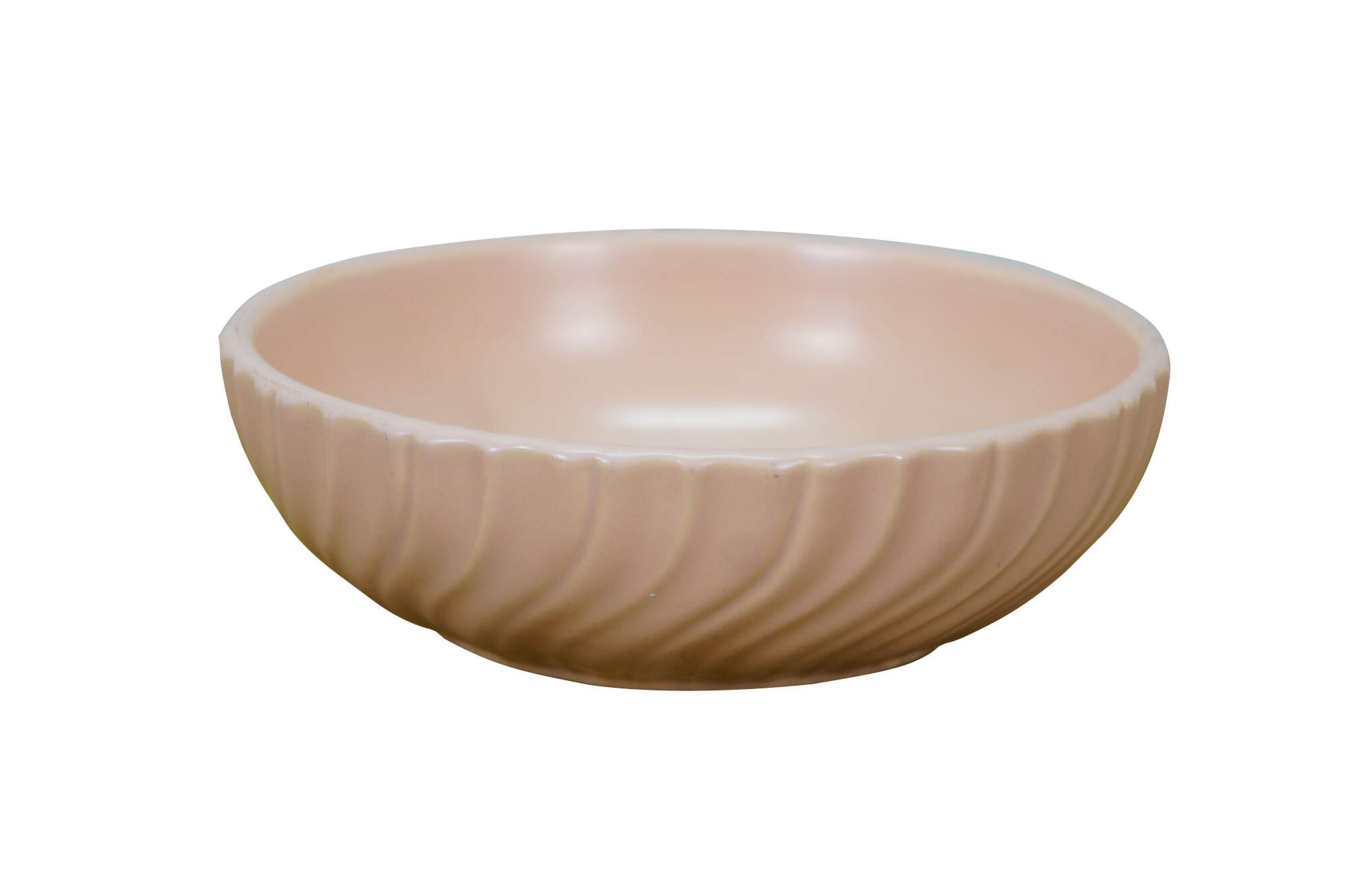
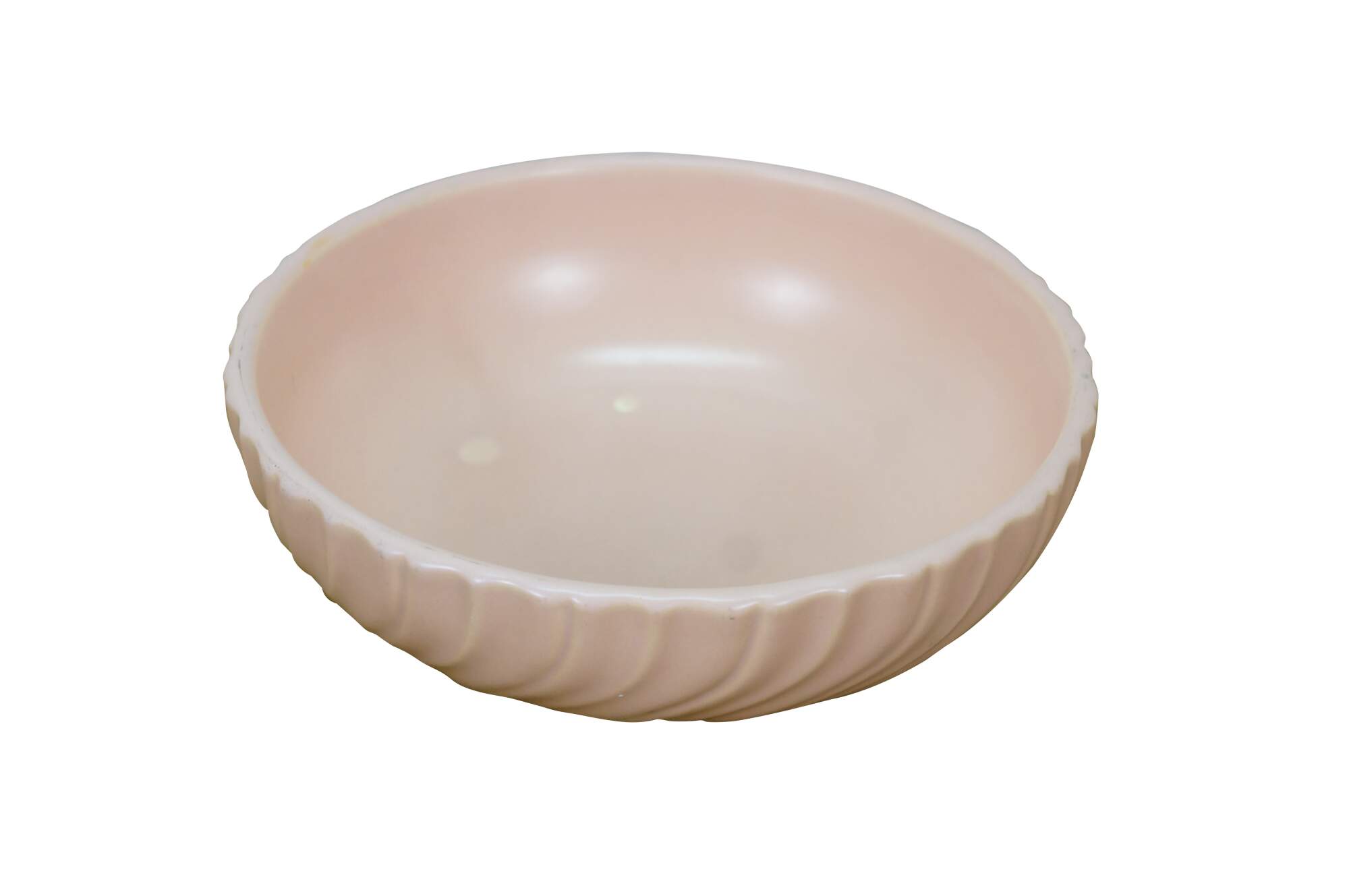
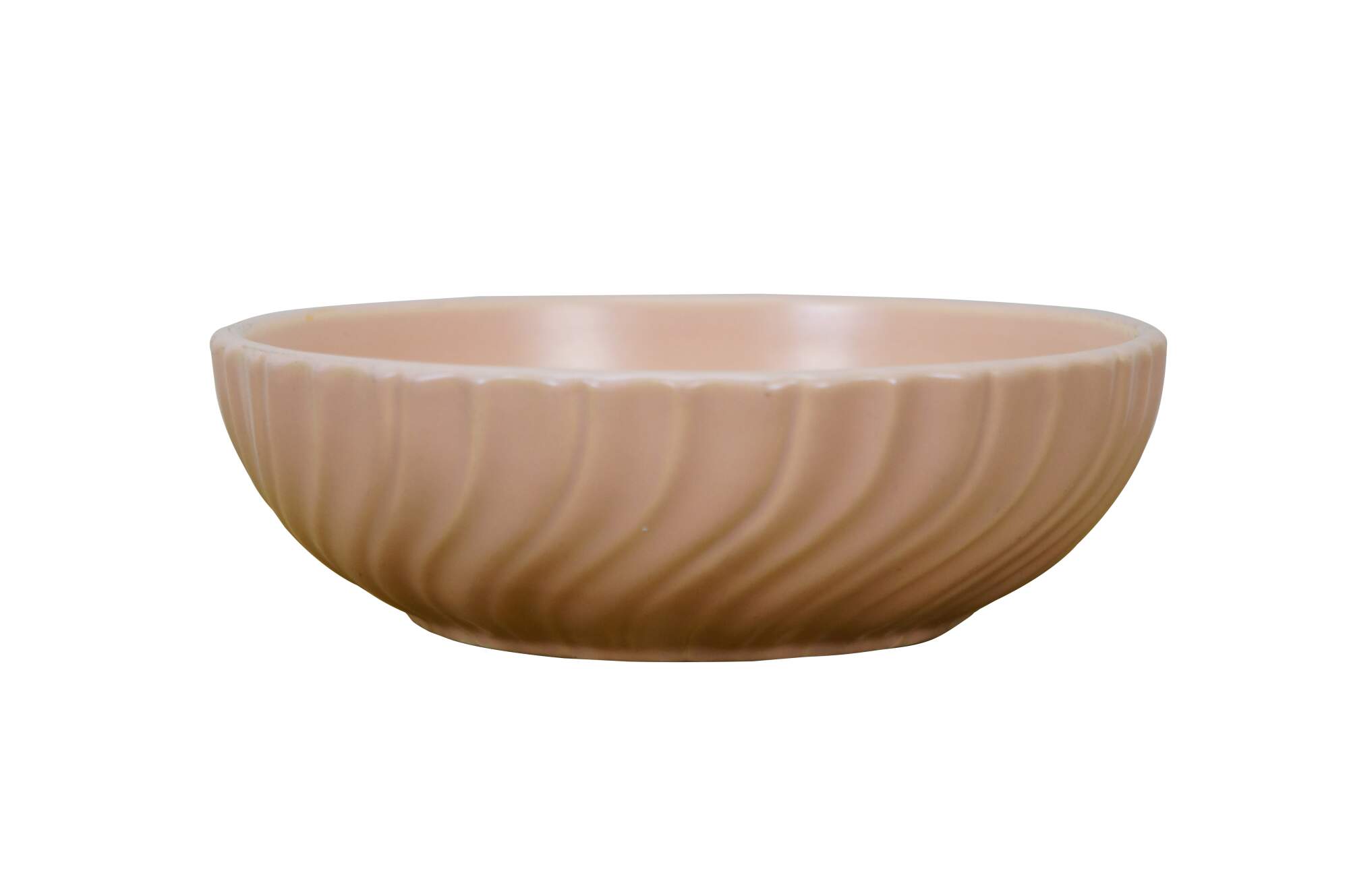
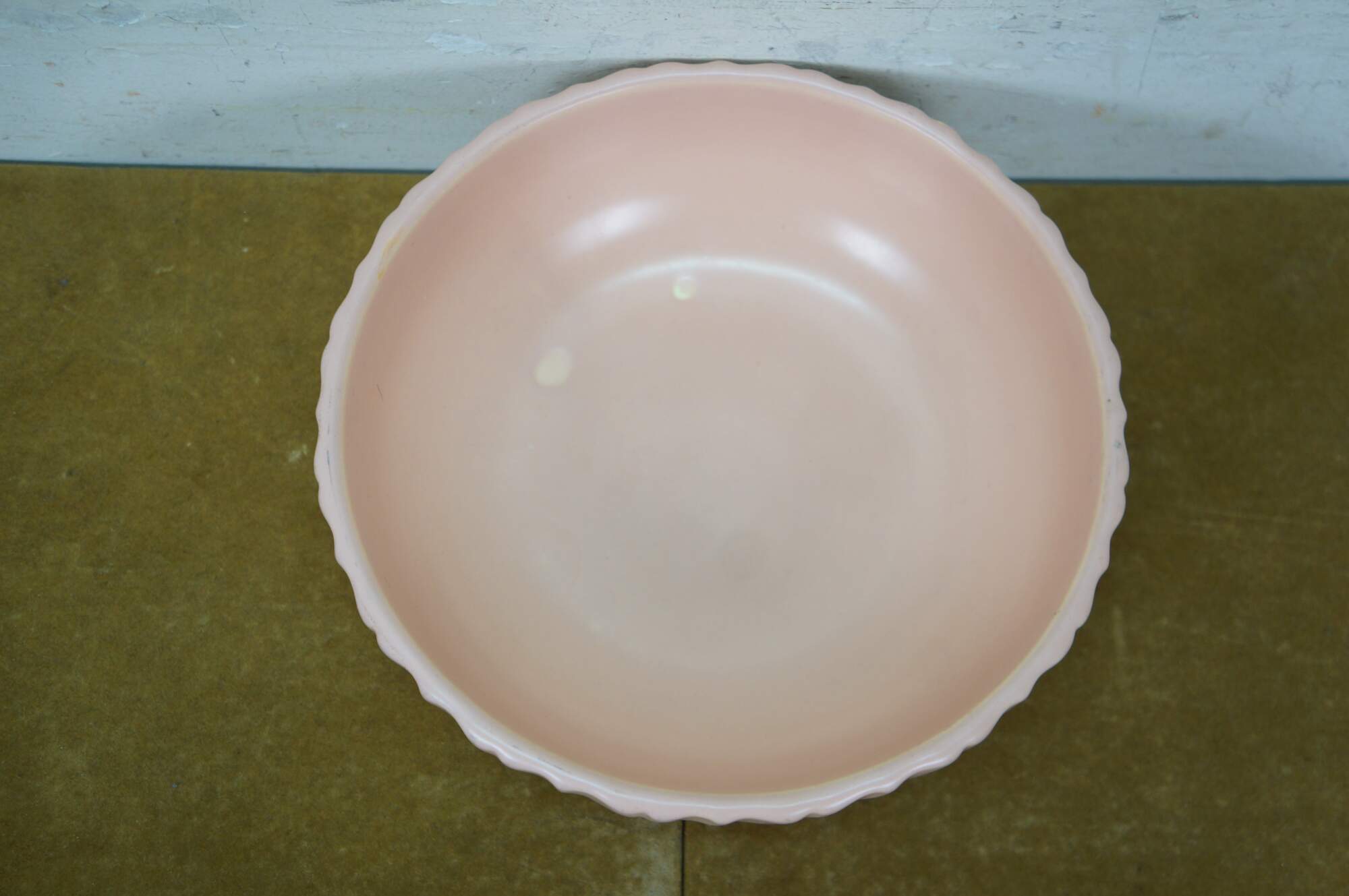
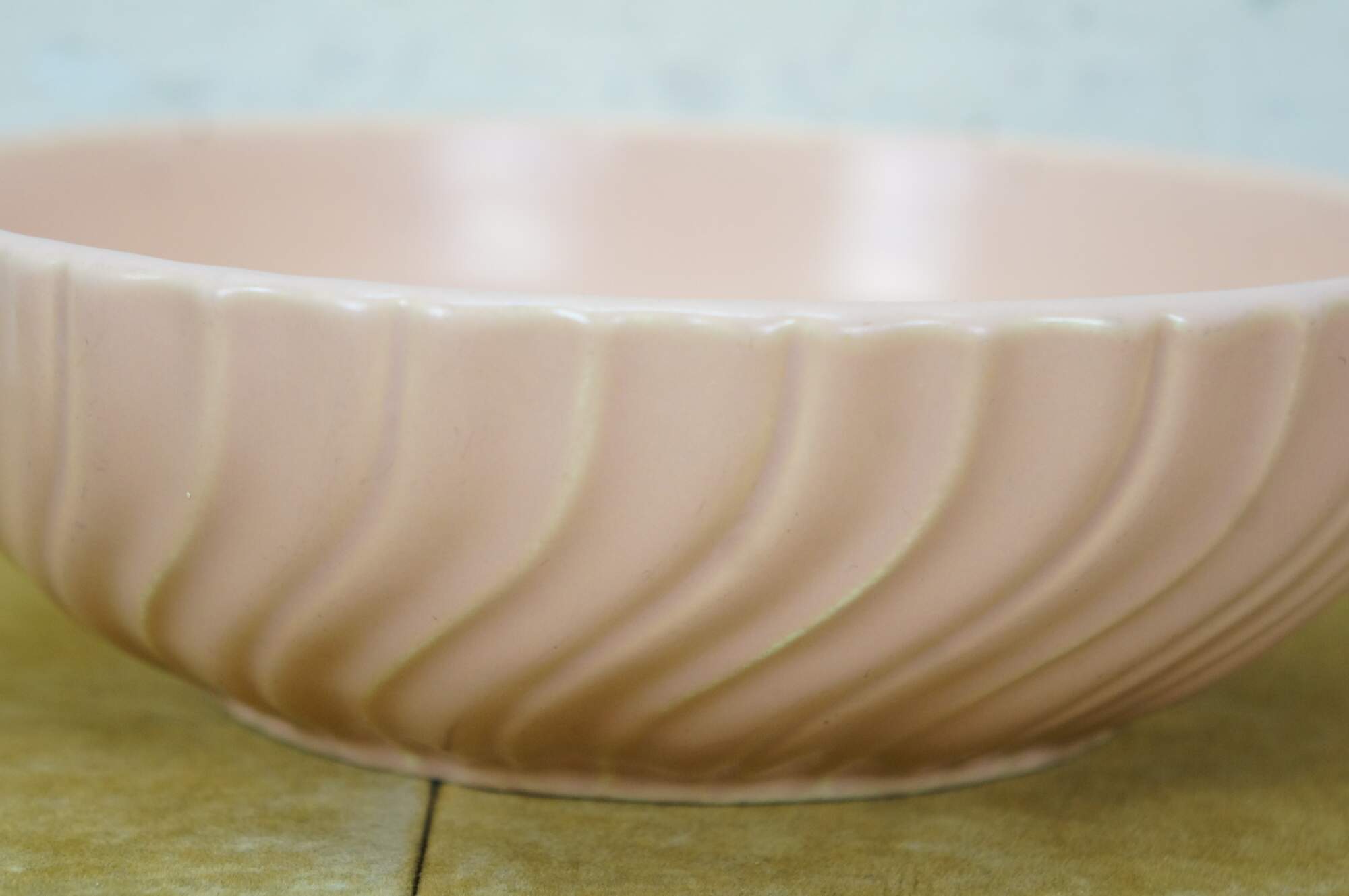
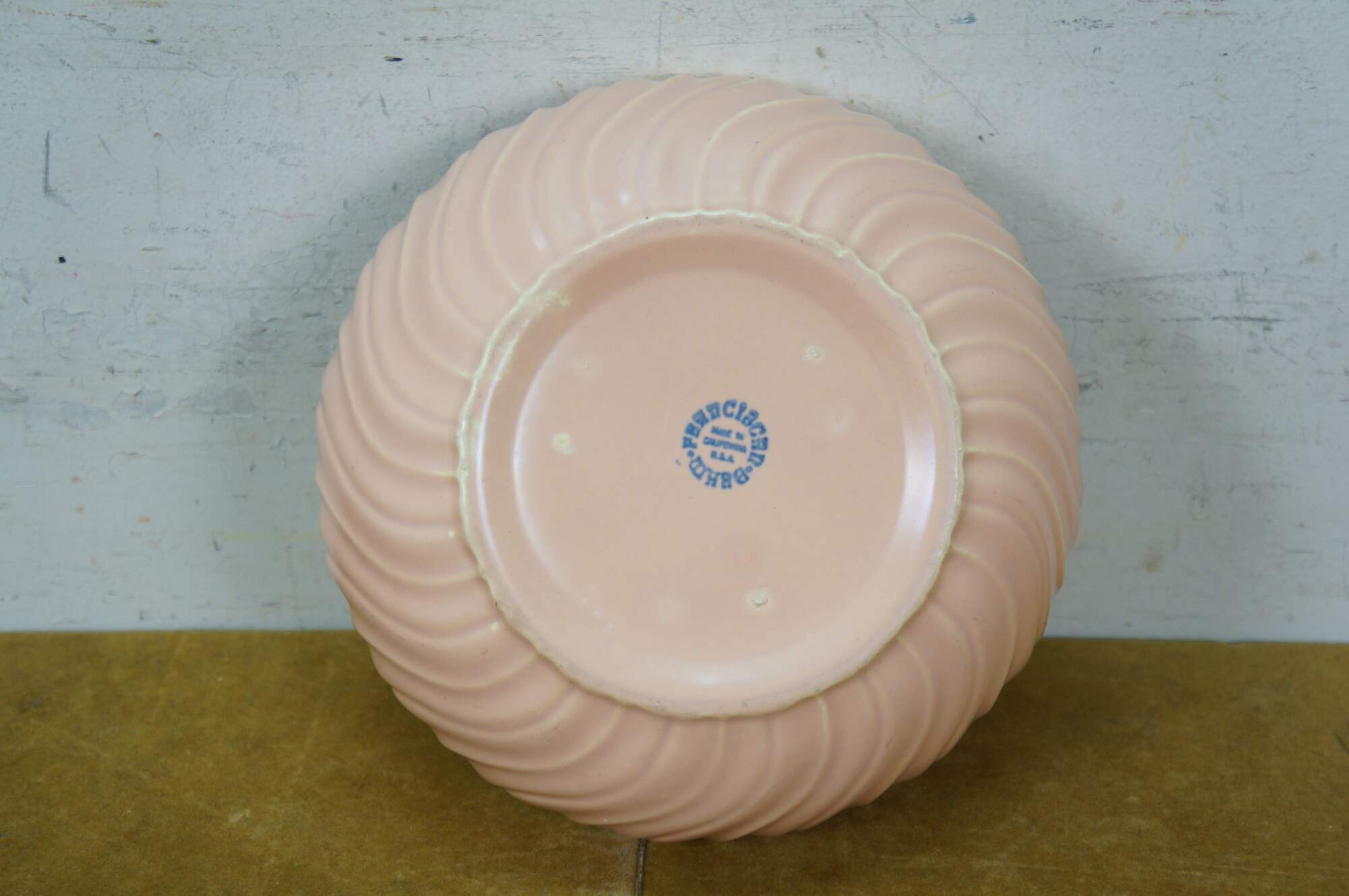
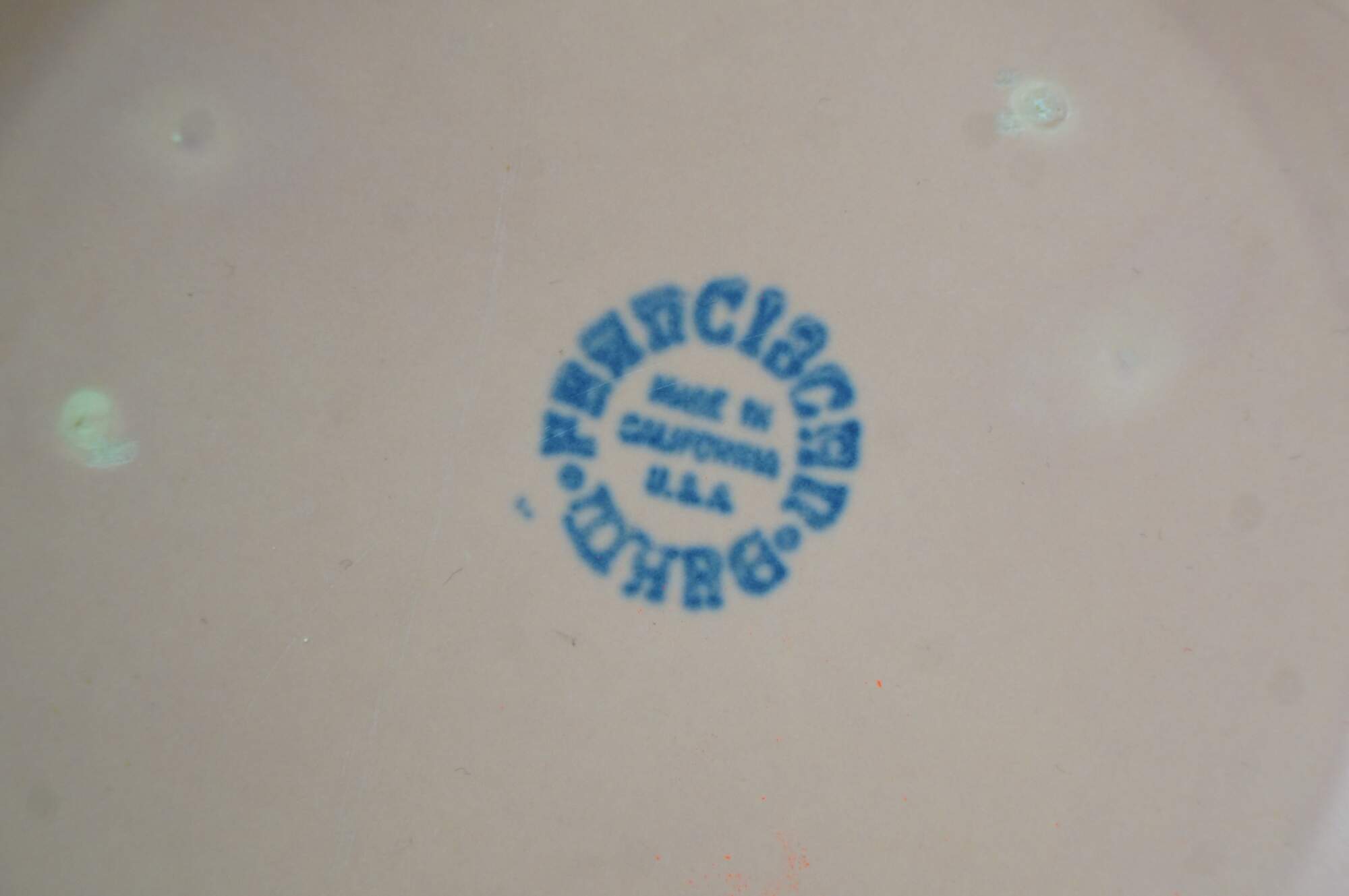
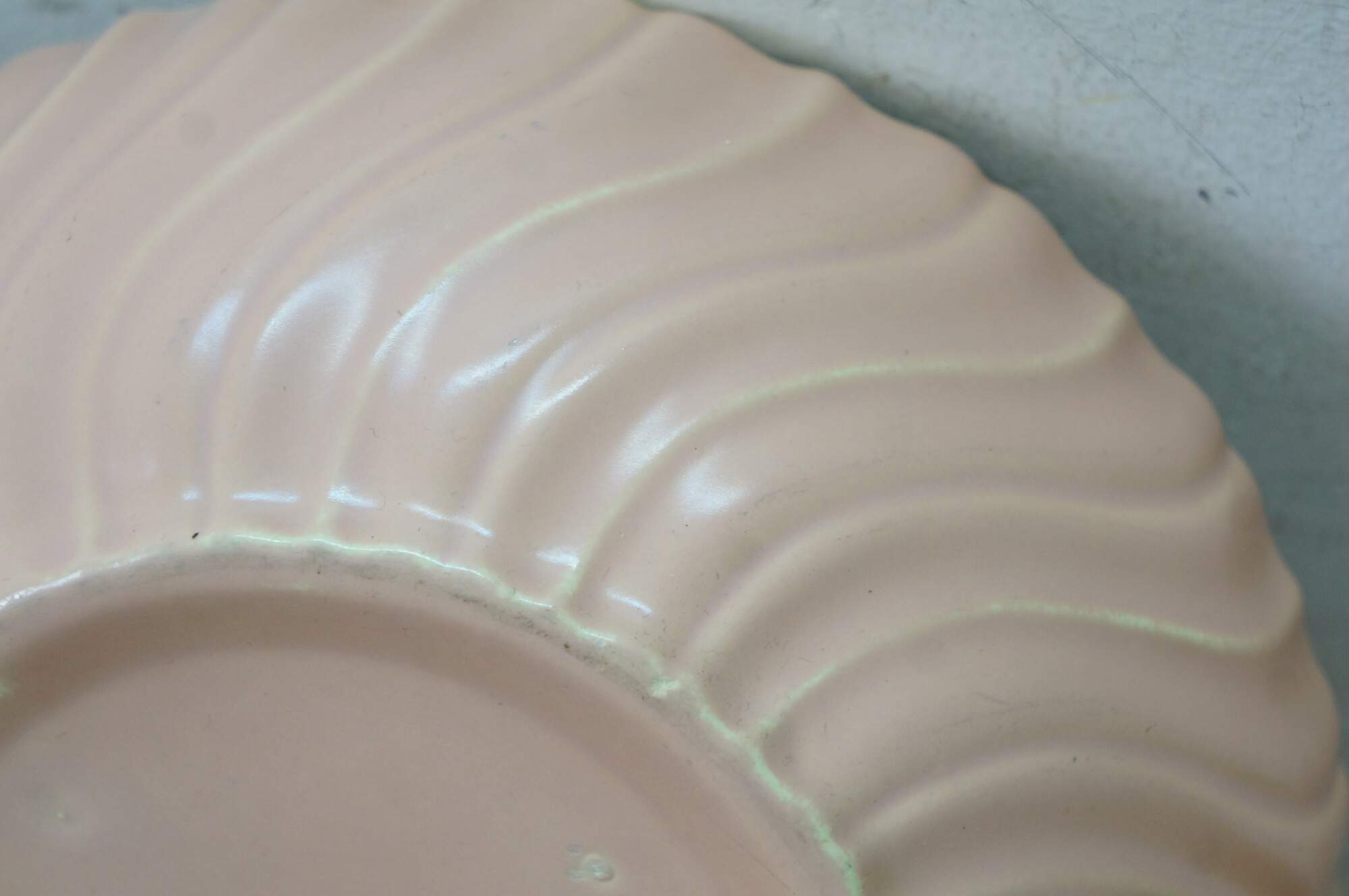
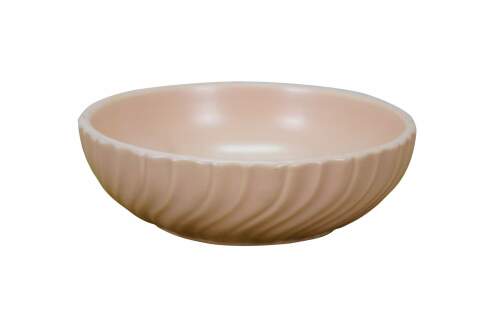
Vintage 20th century round ceramic serving bowl by Franciscan pottery. Round form with swirled texture in a light coral pink.
"Beginning in 1875, as a partnership between Charles Gladding, Peter McGill McBean, and George Chambers, Gladding, McBean & Co. would expand from one factory in Lincoln, California to multiple manufacturing plants throughout the Pacific West Coast producing clay products from sewer pipe to architectural terracotta. In 1934, Gladding, McBean & Co. hired Frederic J. Grant as a vice-president and the new Glendale dinnerware division's plant manager. Frederic, a chemical engineer, had retired as president of the Weller Pottery Company in Ohio, selling off his interest in the company. After becoming tired of touring around the country as a well known amateur golfer, he made up his mind to become active in business again. Mary K. Grant, prior to her marriage to Frederic, was the art director at R. H. Macy Co. in New York City. The company agreed to have Mary Grant style the pottery lines of tableware and art ware; however at this time she would not hold an official position. The tableware and art ware lines, including Coronado, were produced in solid color glazes. Gladding, McBean & Co.’s ware would be produced in a new patented earthenware clay body known as Malinite. After the successful introduction of Franciscan Ware to Gladding, McBean & Co.’s products, Mary K. Grant in 1936 became a paid employee as Lead Stylist and Manager of the Glendale plant’s design department. Mary Grant designed many of the shapes and patterns for Franciscan Ware. The company also purchased shape and pattern designs from contract designers, which would either be used or adapted by Mary Grant for use in the various Franciscan Ware lines of dinnerware and art ware. The popular Coronada tableware with its distinctive swirl pattern and "sculptural feel" was introduced in 1937. To sell and market the dinnerware, the company first used the trade name of Franciscan Pottery. Later deciding the word “pottery” denoted an inferior product, the company changed the trade name to Franciscan Ware. Gladding, McBean & Co. acquired Catalina Clay Products on Catalina Island in 1937 and continued to use the trademark Catalina Pottery for art wares. In 1940, the Gladding, McBean & Co. introduced their first hand-painted embossed earthenware dinnerware line Franciscan Apple, and shortly thereafter in 1941, Desert Rose. In 1942, after three years of experimentation, Gladding, McBean & Co. entered the fine china market with 14 patterns. In 1942, World War II curtailed the introduction of new dinnerware lines and shapes. The Company continued to produce ware already in production, however discontinued all art ware lines. After World War II, the Southern California ceramic industry was booming. From garages to industrial plant facilities, pottery was being made to satisfy demand from the decline of imports from Europe and Japan. In 1948, the Company introduced Encanto, a new line of Franciscan fine china designed by Mary Grant. In 1952, a great change was occurring in the direction of the Gladding, McBean & Co., Atholl McBean, president from 1923 to 1938 and chairman of the board since 1938, decided to retire as Chairman though remaining on the board of directors. With a new president and chairman of the board, the company reorganized. The new design team was quickly put into action designing new earthenware dinnerware shapes and patterns to be included in the Gladding, McBean & Co.’s 1954 Franciscan Ware marketing promotion Modern Americana. In 1955, Gladding, McBean & Co. introduced a new art ware line. The company had ceased manufacturing all their earthenware art ware lines under the trademarks of Franciscan and Catalina in 1942. However, the Company continued until 1955 to manufacture fine china blanks for the Max Shoenfeld Company and earthenware lamp bases for outside companies to assemble and sell under their trade names. This new Franciscan line was named Contours by George T. James. Franciscan Contours did not appeal to the buying public, and was discontinued shortly after its introduction. In 1962, West coast based Gladding, McBean & Company merged with East coast based Lock Joint Pipe Company merged, forming a new corporation: International Pipe and Ceramics Corporation (later Interpace). In 1968, Interpace acquired its second largest company, Shenango China. Shenango was the owner and maker of Castleton China and was a large supplier of restaurant china. Franciscan Gourmet was designed by Otto Lund and Jeffrey Tousley. In 1969, Interpace purchased the Tiffin Glass Company, Tiffin, Ohio and began to manufacture glass to coordinate with their Franciscan dinnerware lines. In 1976 Interpace sold Alfred Meakin to a group of investors and the former Gladding, McBean Lincoln plant to Pacific Coast Building Products. In 1977, all fine china products were discontinued. In 1979 Interpace sold the Franciscan Ceramics division in Los Angeles to Wedgwood, Shenango China Company to the Anchor Hocking corporation, and Mayer China to a group of investors. The Tiffin Glass division of Interpace was sold to Towle Silversmiths. Interpace corporation was dissolved in 1984. In 1984, Wedgwood closed the Franciscan Ceramics division. The production of the Franciscan patterns Desert Rose, Apple, and Fresh Fruit were moved to the Johnson Brothers division of Wedgwood in England. In 1986, Waterford Glass Group plc purchased Wedgwood and the group was renamed Waterford Wedgwood. The use of the brand name Franciscan Ware was retired in 2013. On 2 July 2015 the acquisition of WWRD by Fiskars Corporation was completed including brands Waterford, Wedgwood, Royal Doulton, Royal Albert and Rogaška." (Wikipedia)
Condition
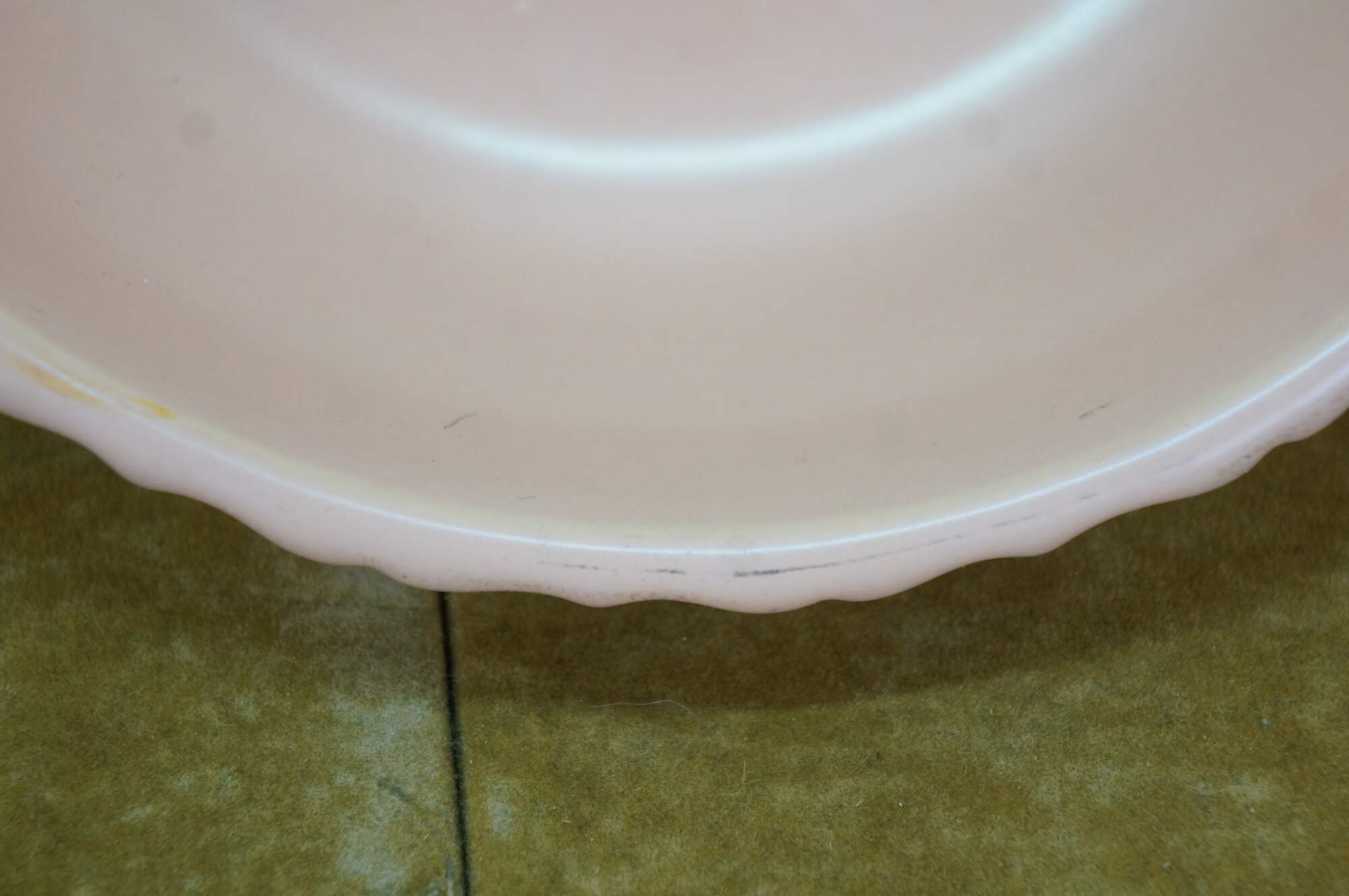
Good Overall - Light wear
Dimensions
7.75" x 2.25" (Diameter x Height)