


Shipping:
Free Shipping Included
Delivery:
Estimated 2-15 Business Days
Payments:
Credit Card, Check, Cash, PayPal, Apple Pay, Venmo
Returns:
30 Days 100% Money Back Guarantee, Buyer Pays Return Shipping
Description
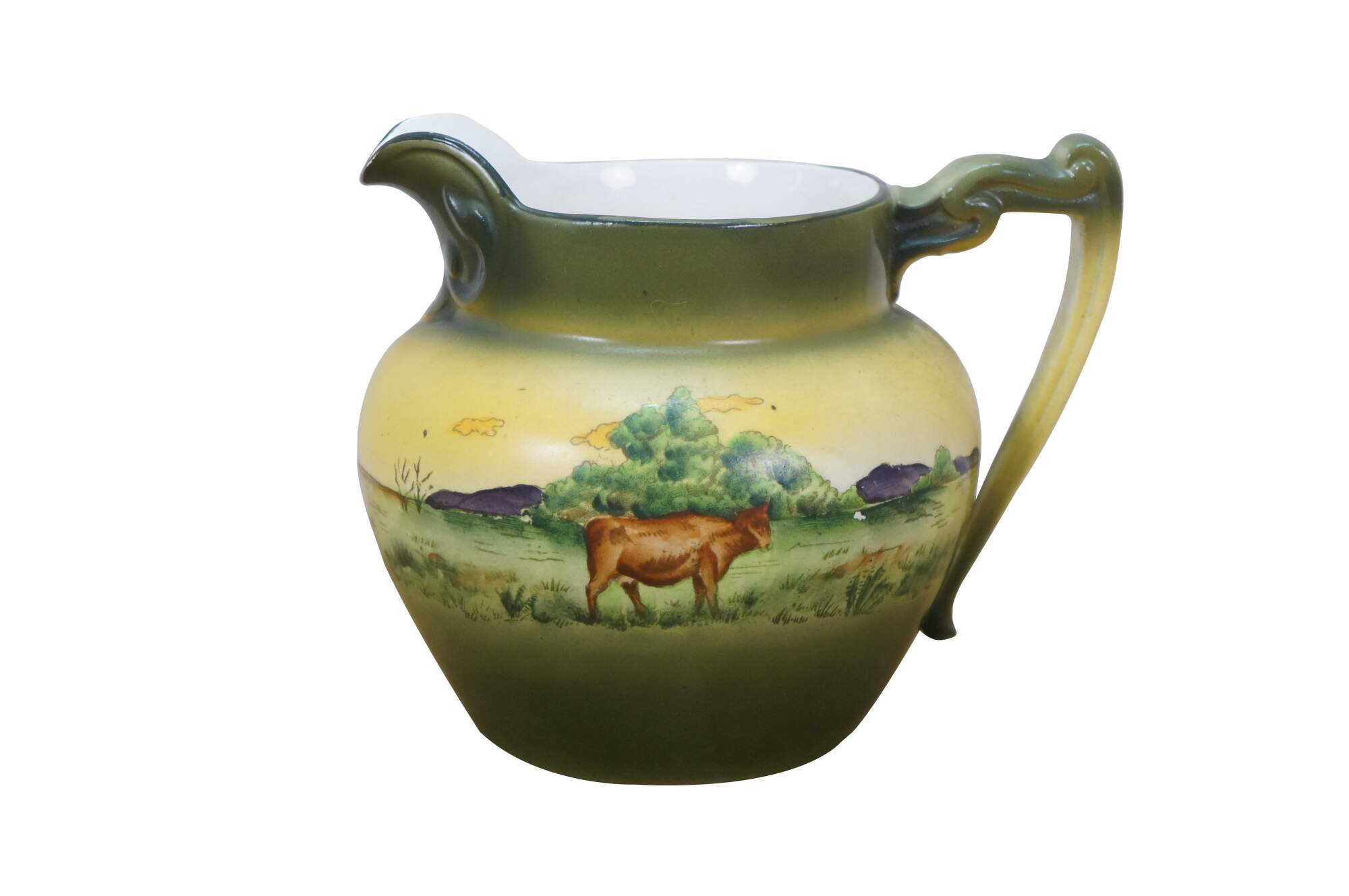
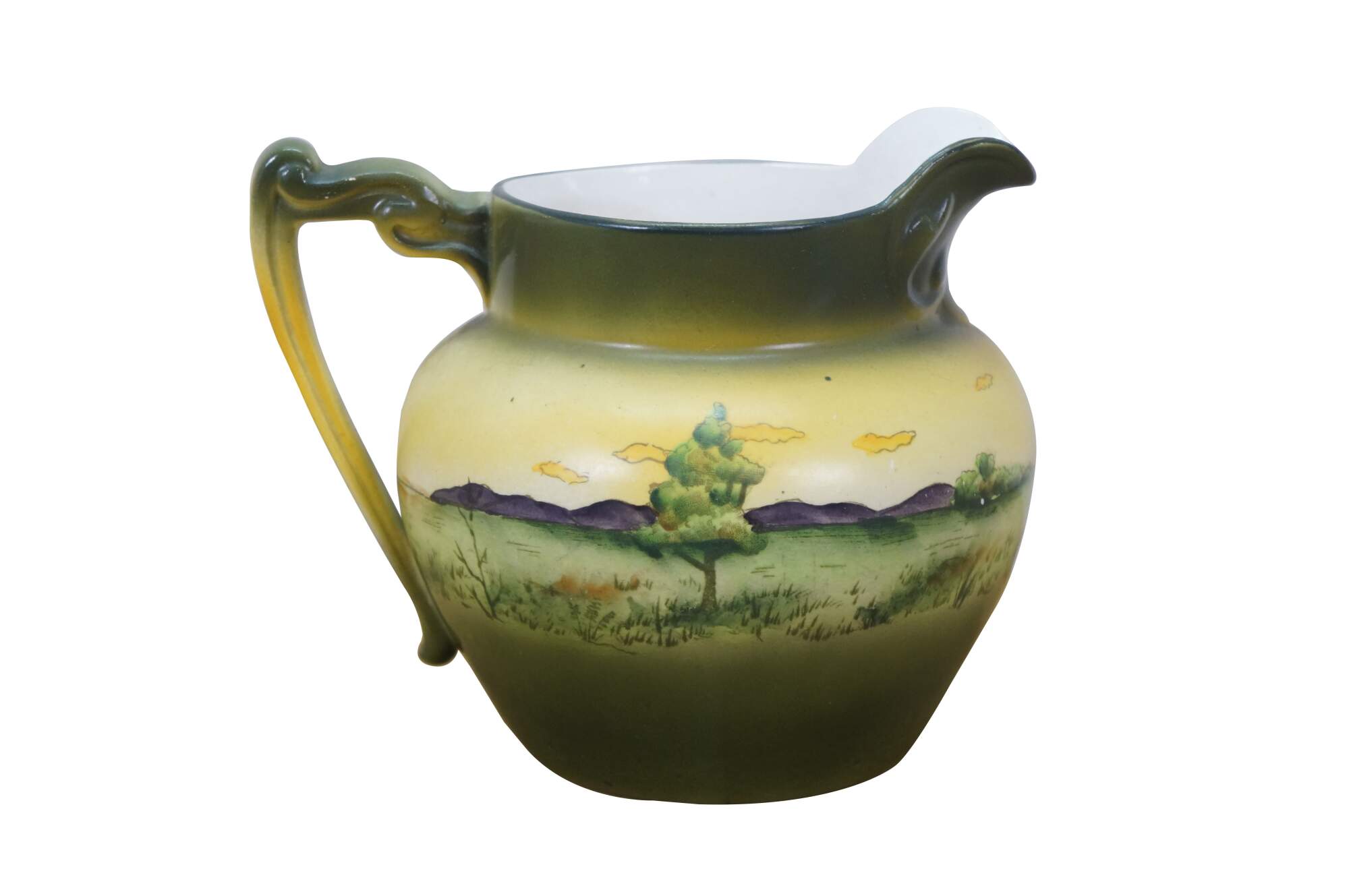
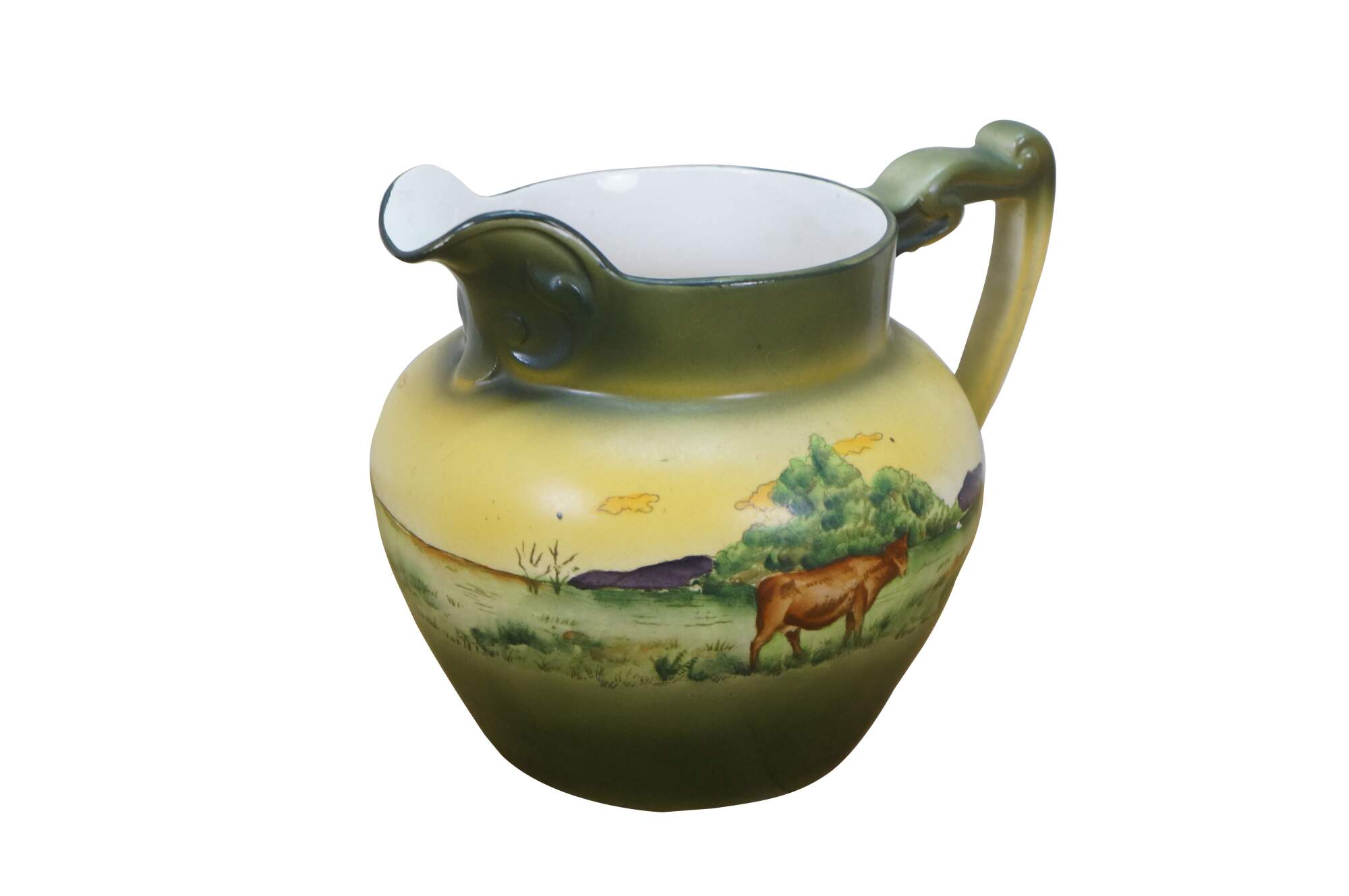
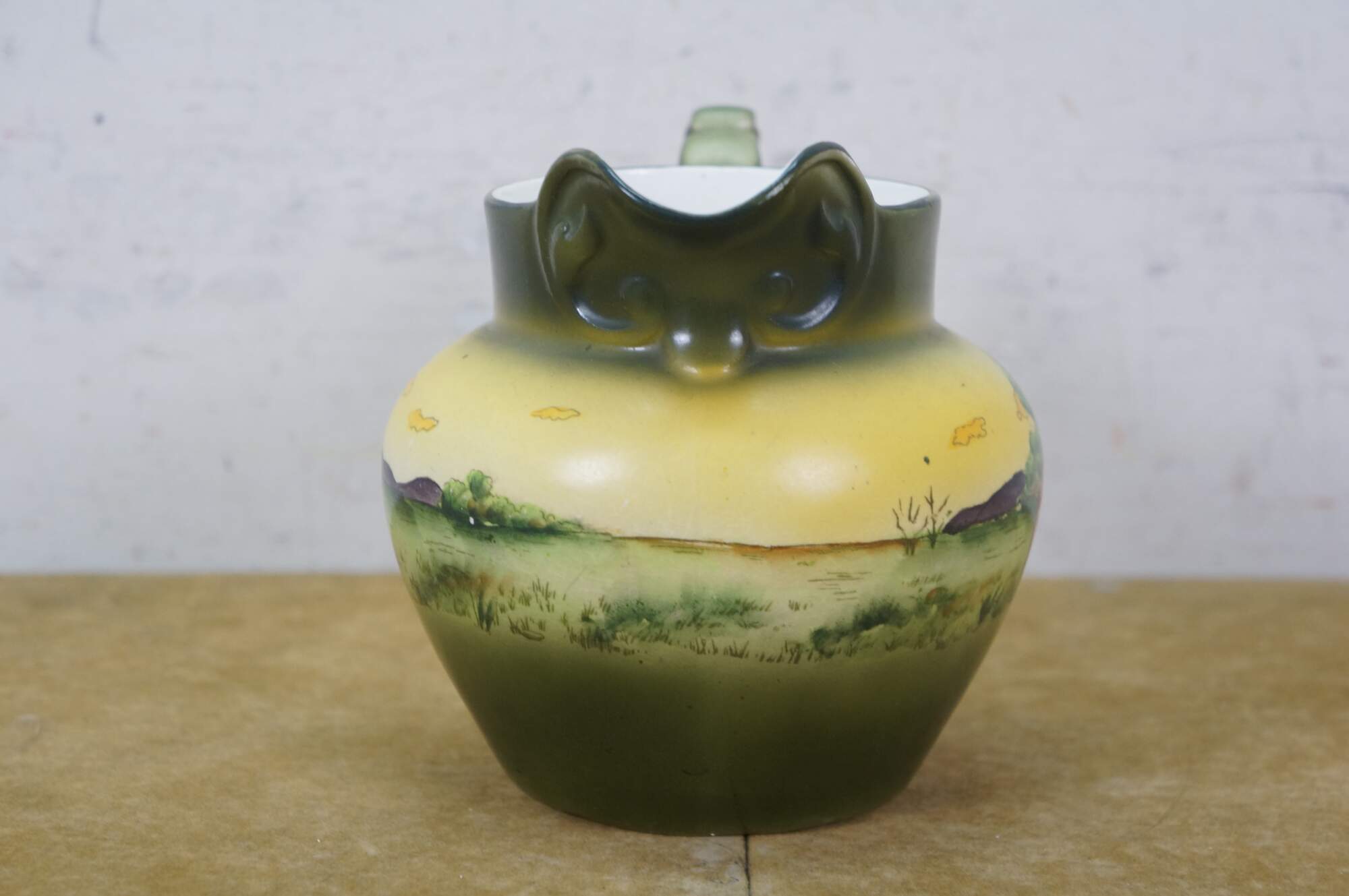
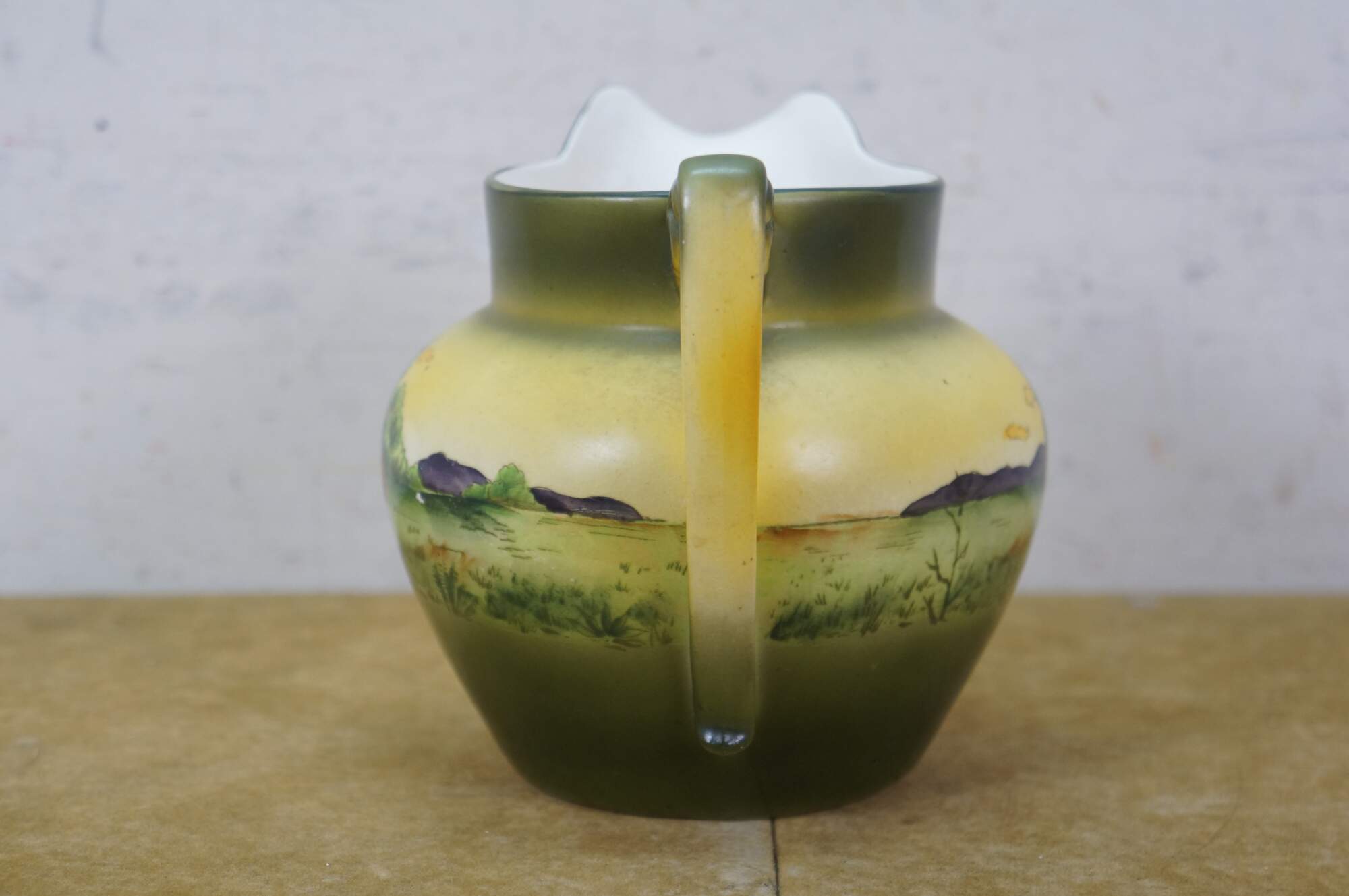
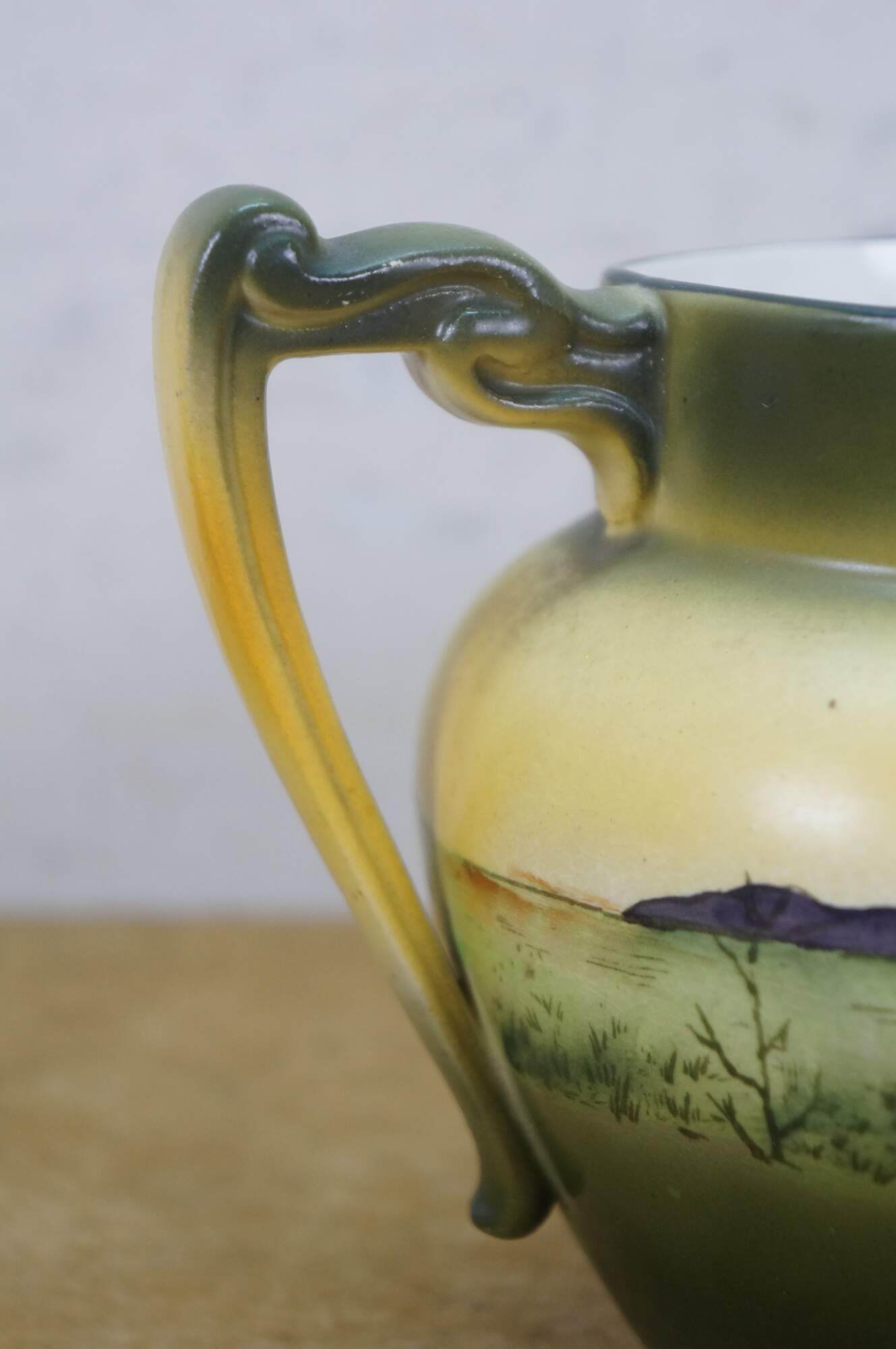
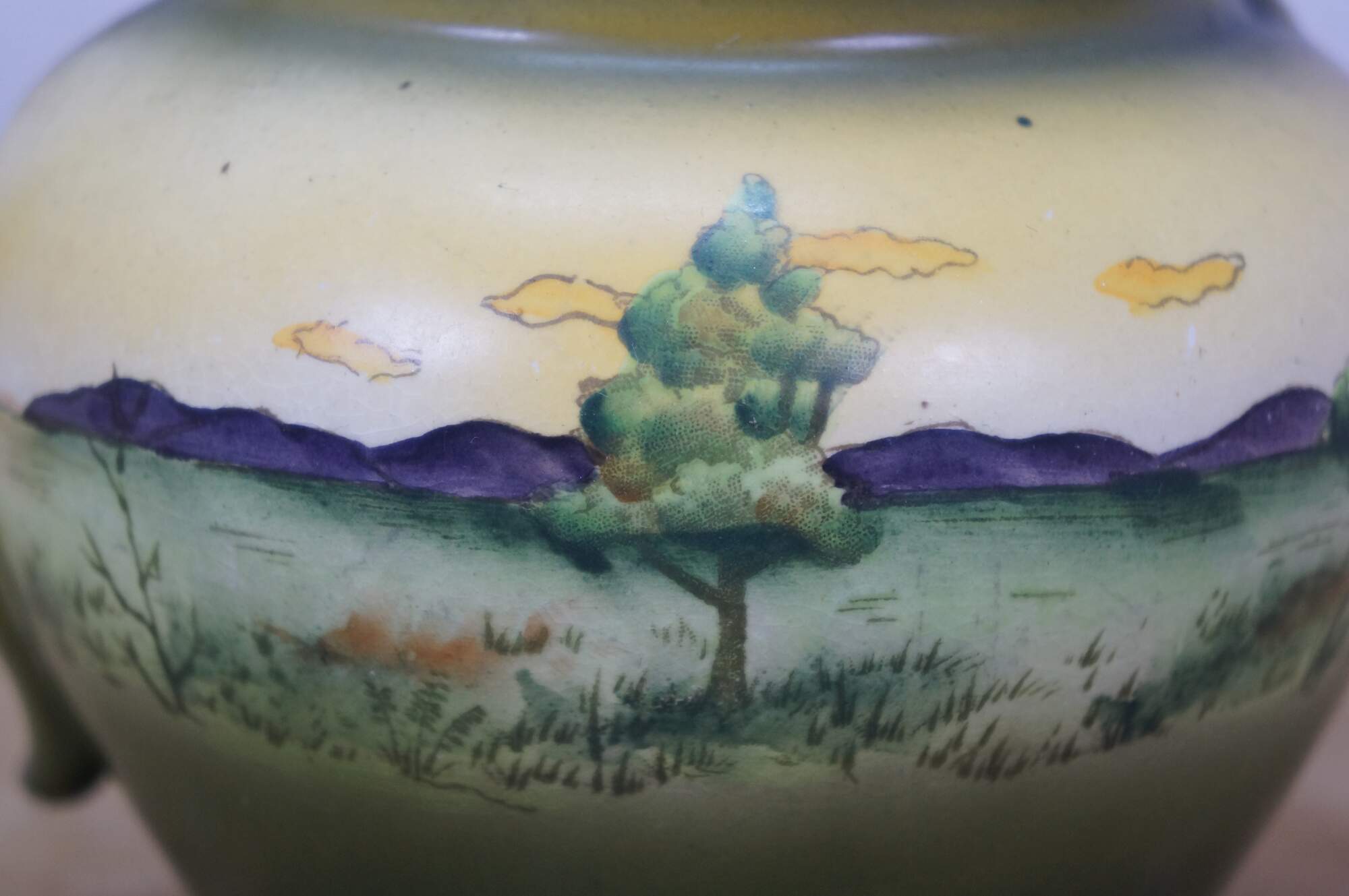
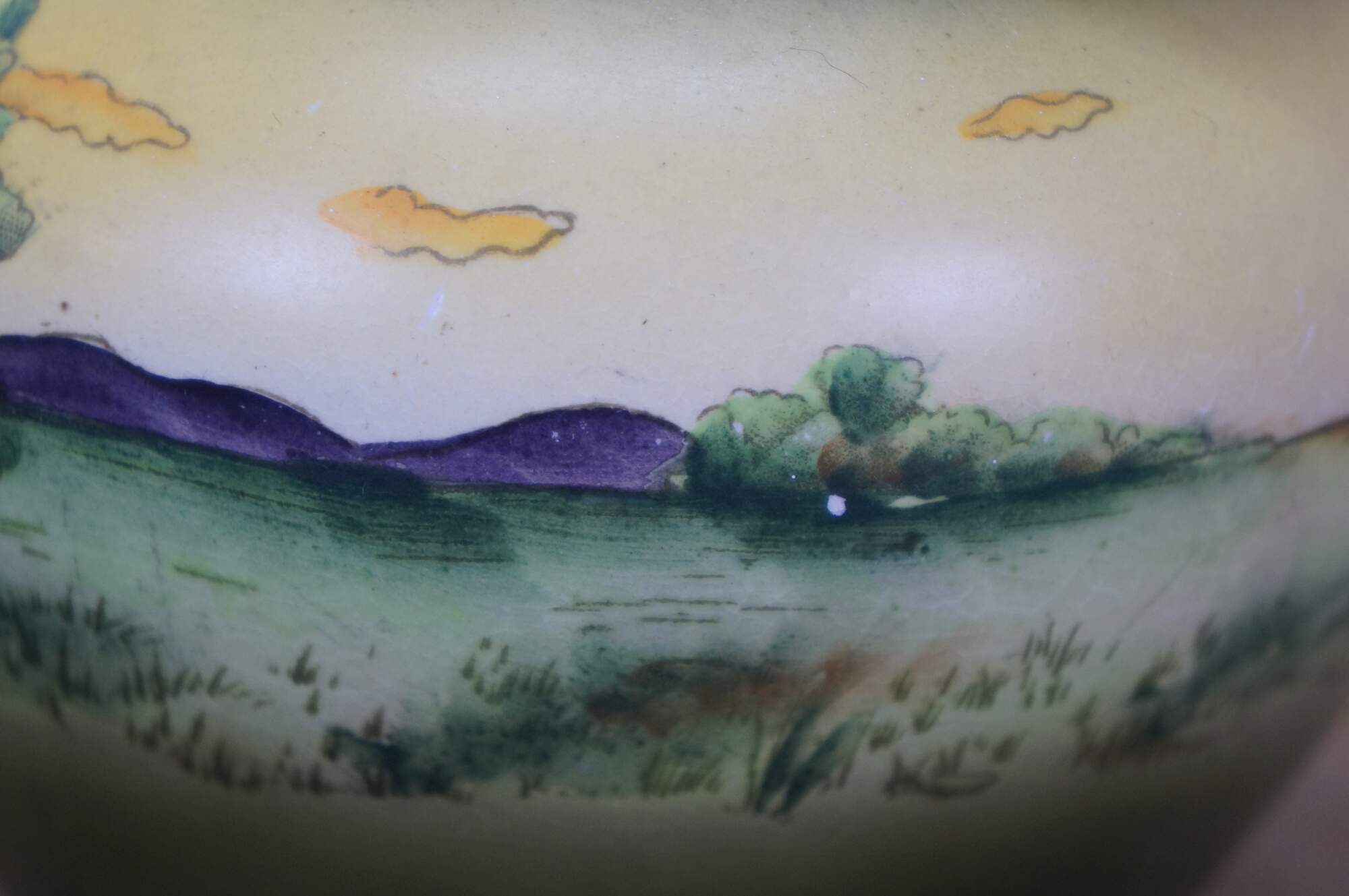
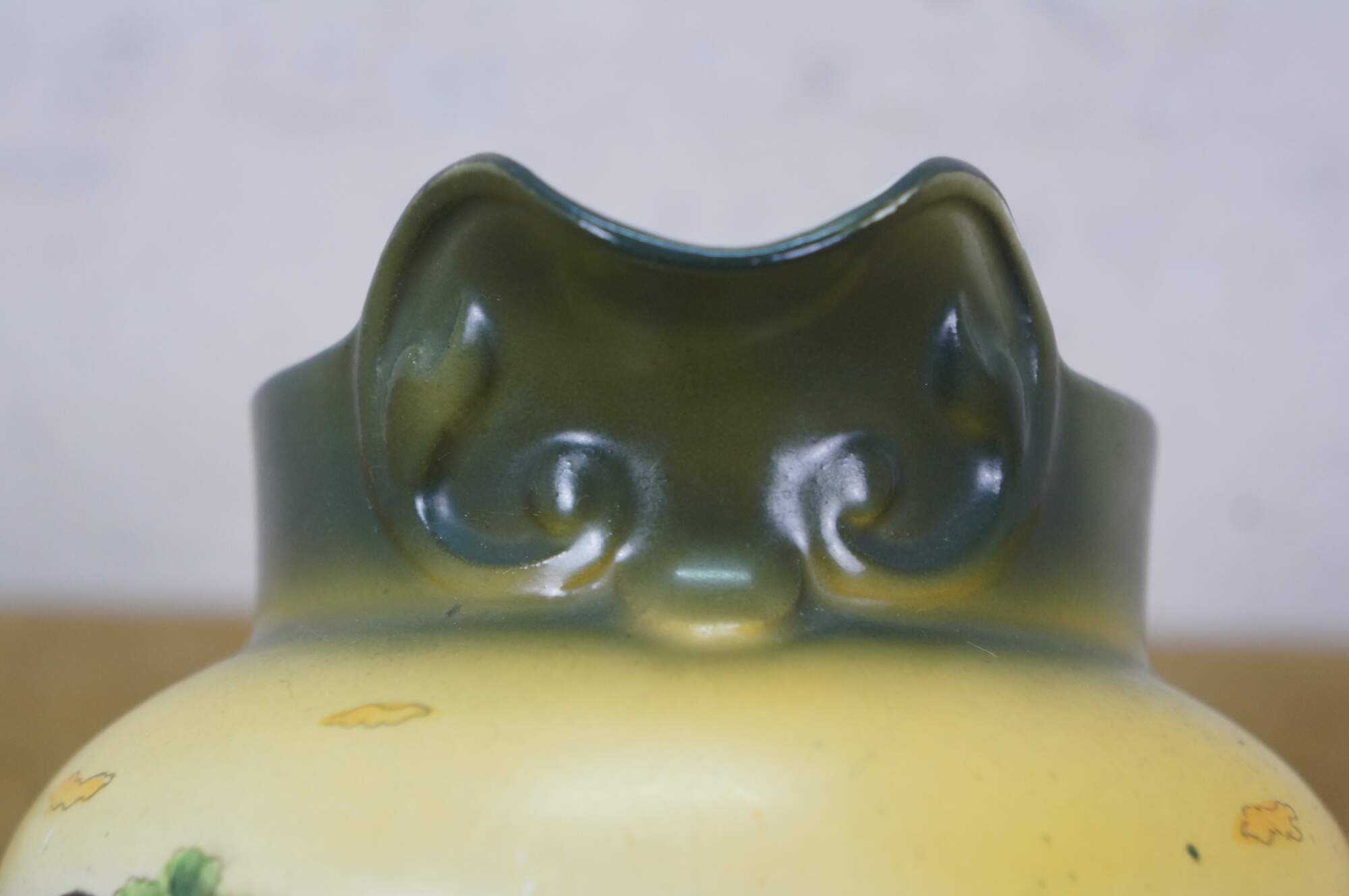
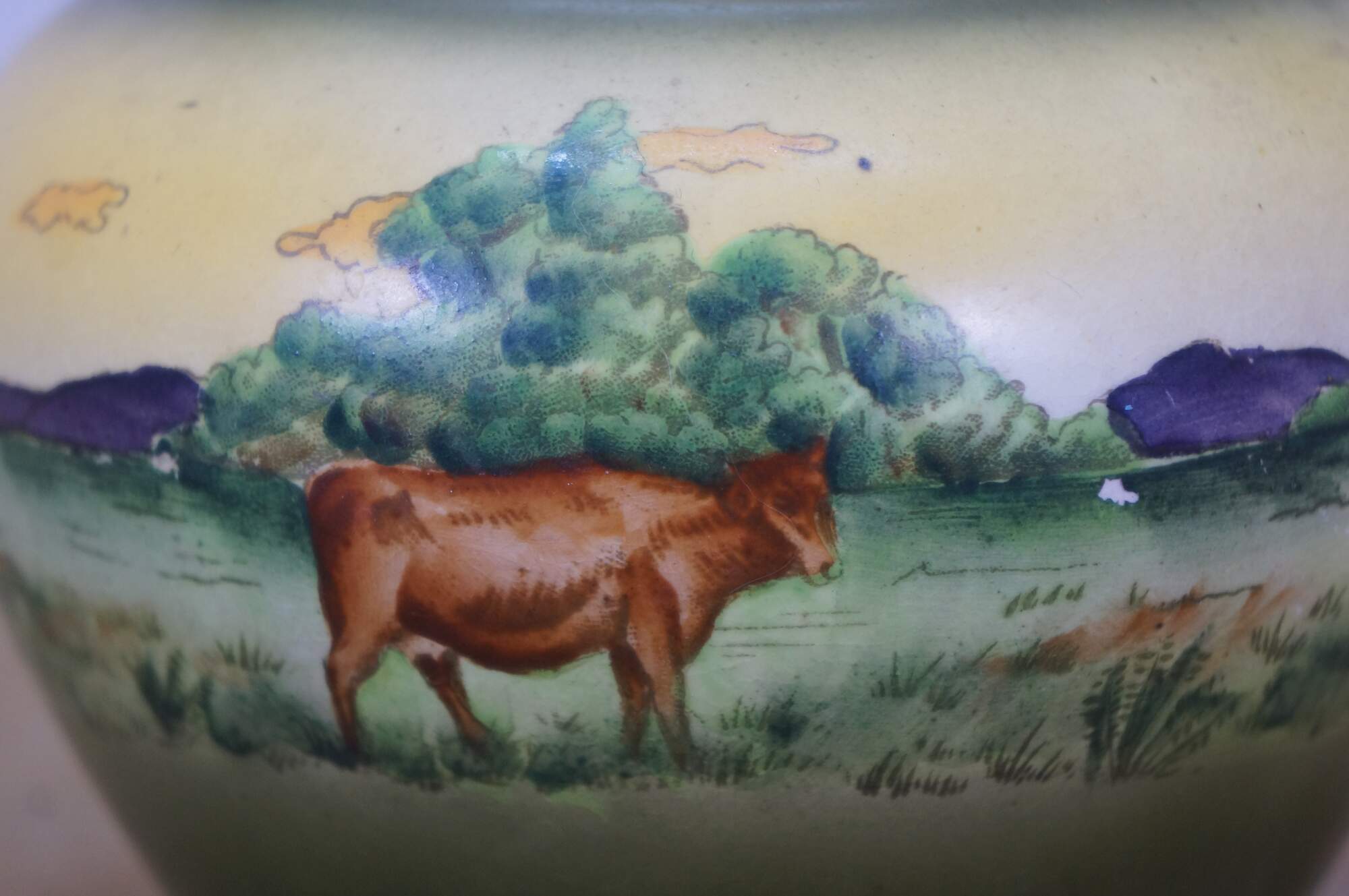
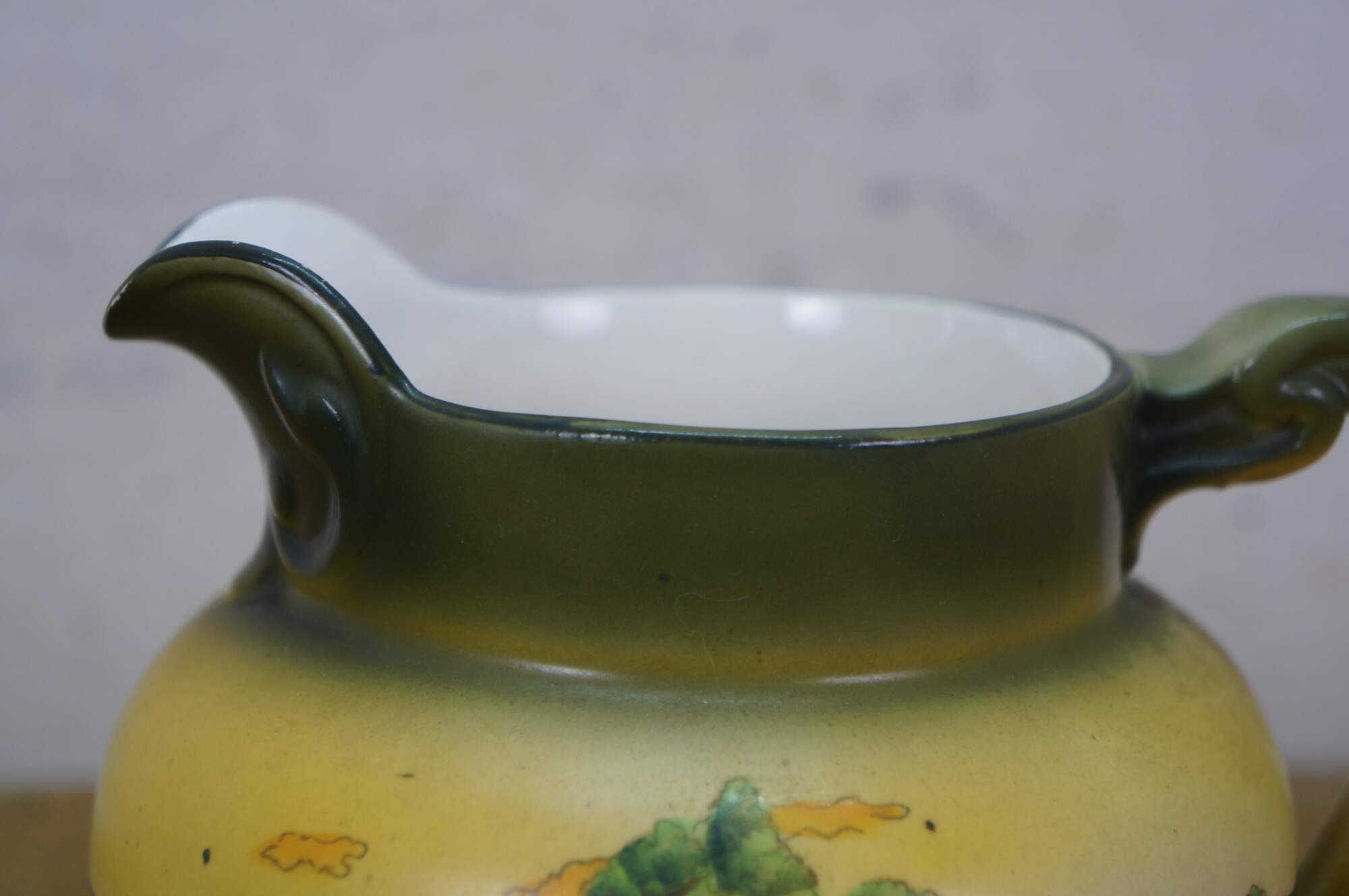
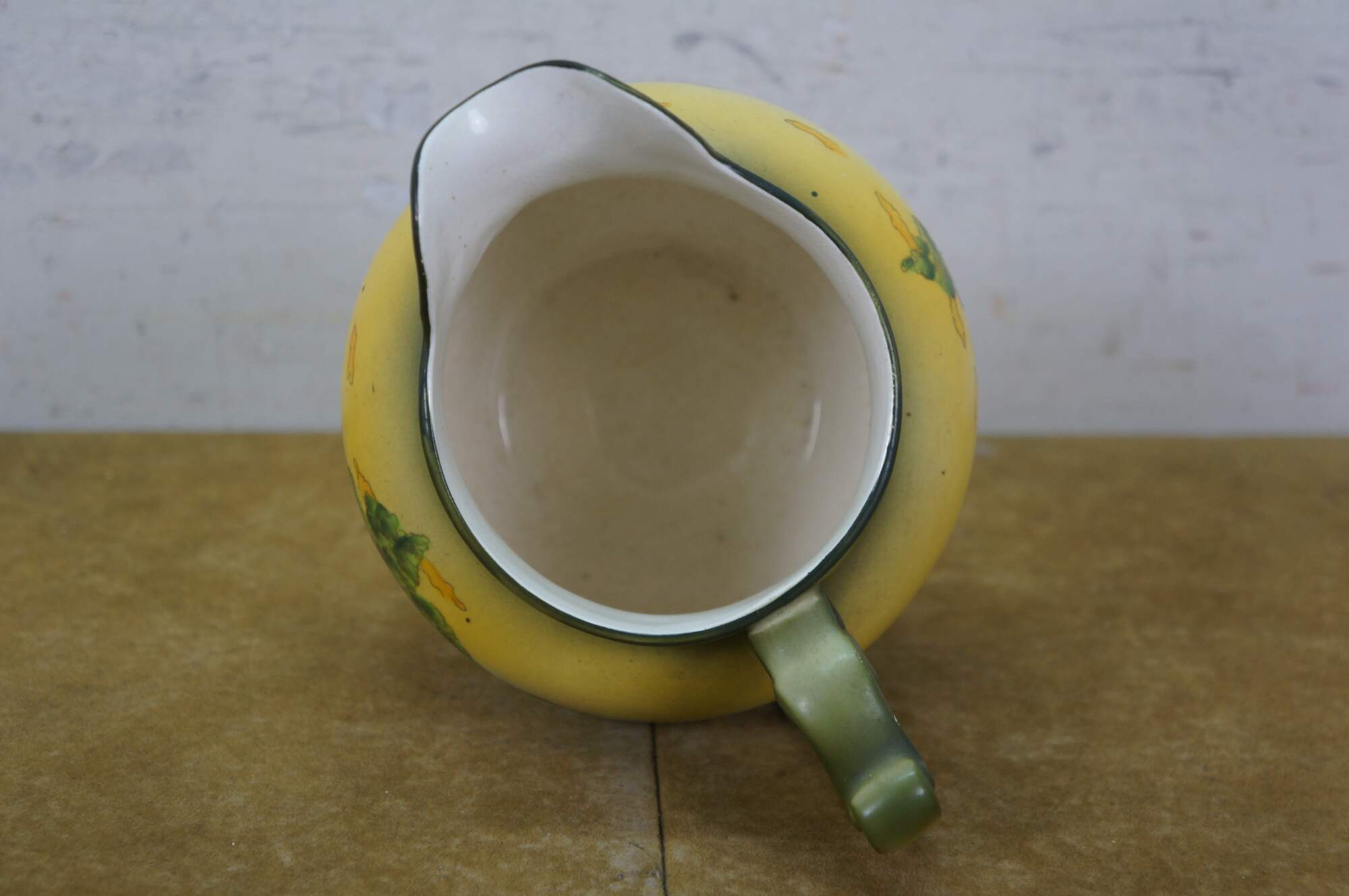
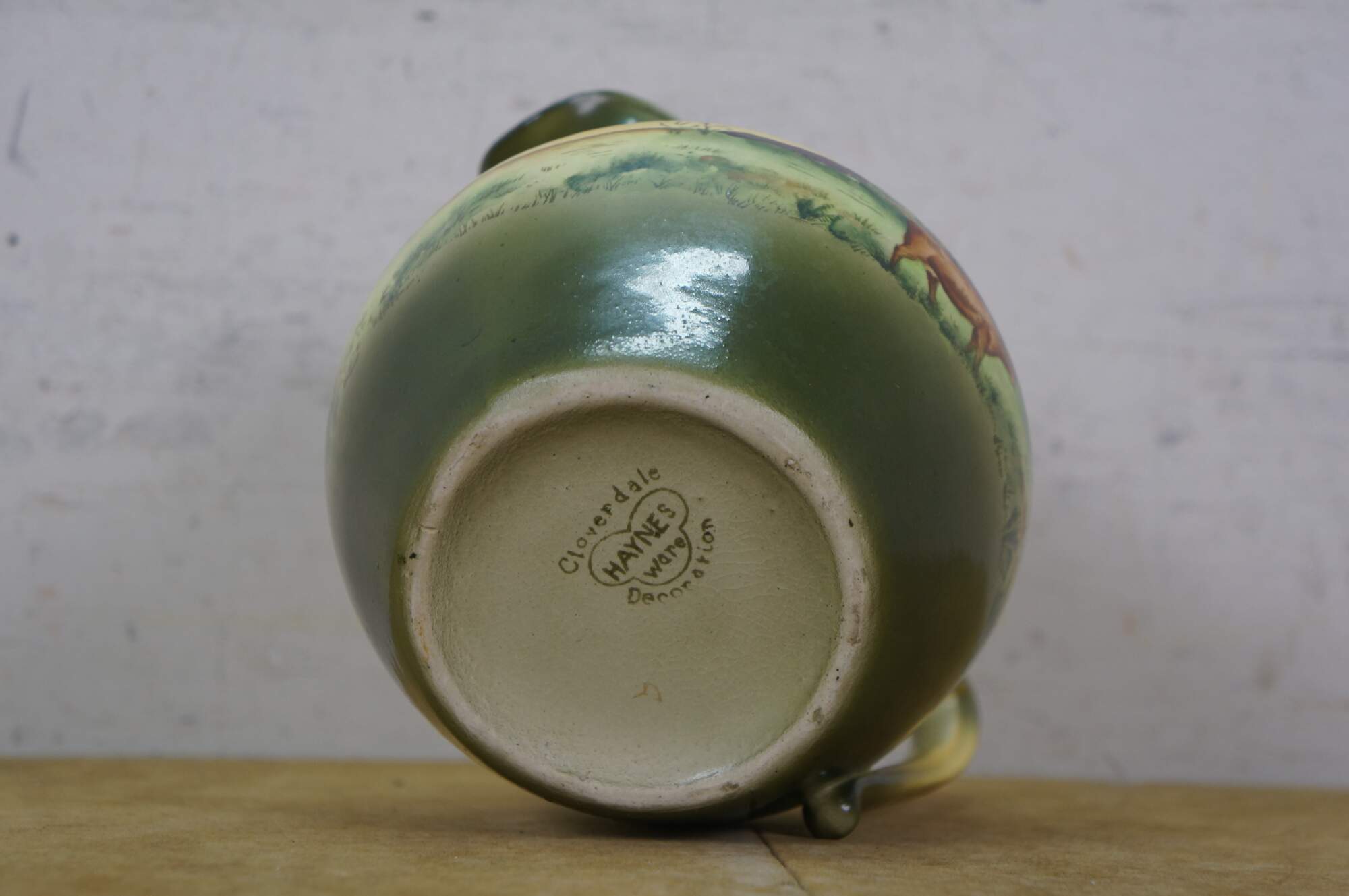
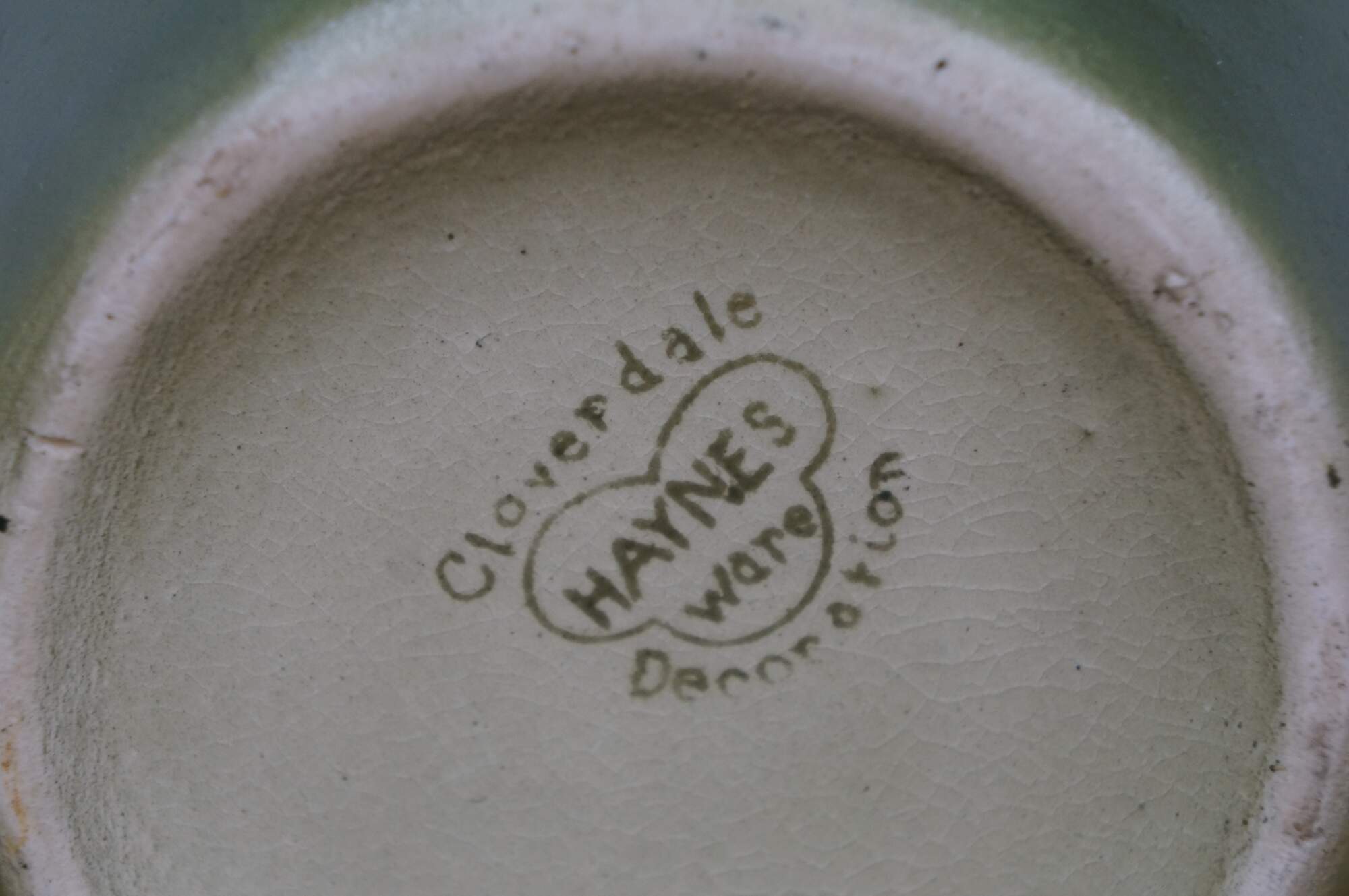
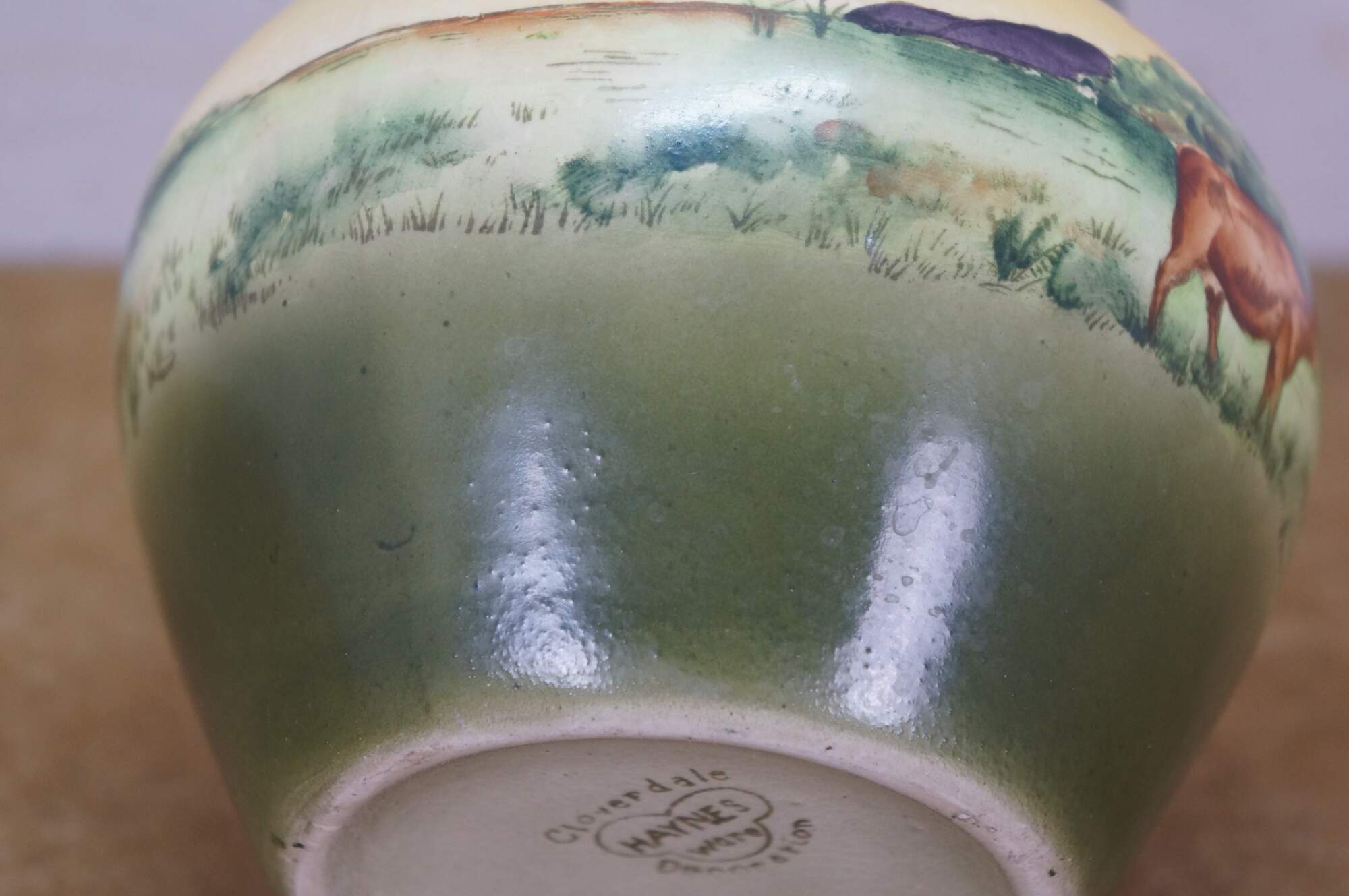
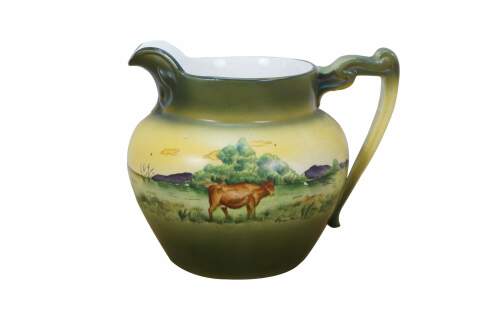
Late 19th to early 20th century porcelain Haynes Ware farmhouse cream pitcher by D.F. Haynes & company in the Cloverdale pattern. Fully decorated in green and yellow with a hand painted country landscape focused on a brown cow.
"D.F. Haynes & Co. / The Chesapeake Pottery Co. / Haynes Bennett & Co. / D.F. Haynes & Son - David Francis Haynes, born in 1835, embarked on a journey that would see him become a central figure in Baltimore’s porcelain industry. His early experiences in Lowell, Massachusetts, and subsequent travels to England laid the groundwork for his deep understanding of the ceramics trade. Haynes, along with skilled English potters, established Chesapeake Pottery in 1879 as an art pottery. Primarily an artist, Haynes was one of the main designers. The pottery’s initial years were characterized by rapid expansion and an unwavering commitment to quality. Haynes introduced hard-paste porcelain and a variety of lines, including “Real Ivory” and “Baltimore Majolica,” which showcased the pottery’s artistic ambitions. The employment of sculptor James Priestman to design parian porcelain plaques was a testament to Haynes’s dedication to blending artistic excellence with commercial success. In 1882 he purchased the Chesapeake Pottery which had two buildings and a single kiln. Despite its artistic successes, Chesapeake Pottery faced numerous challenges, including labor unrest, financial setbacks, and intense rivalry with contemporaries like Edwin Bennett. The company was called D.F. Haynes & Co. until 1887 when The Chesapeake Pottery Company was organised. The name changed to Haynes Bennett & Co. when he merged with the Edwin Bennett Pottery Company, in 1890. The sale of the pottery to Bennett marked a shift towards more utilitarian production, illustrating the delicate balance between artistic pursuits and commercial viability in the decorative arts. The name then became D.F. Haynes & Son in 1895. The closure of D.F. Haynes Ceramics in 1914 signified the end of an era in American porcelain production." (Stein Marks / Encyclopedia.Design)
Condition
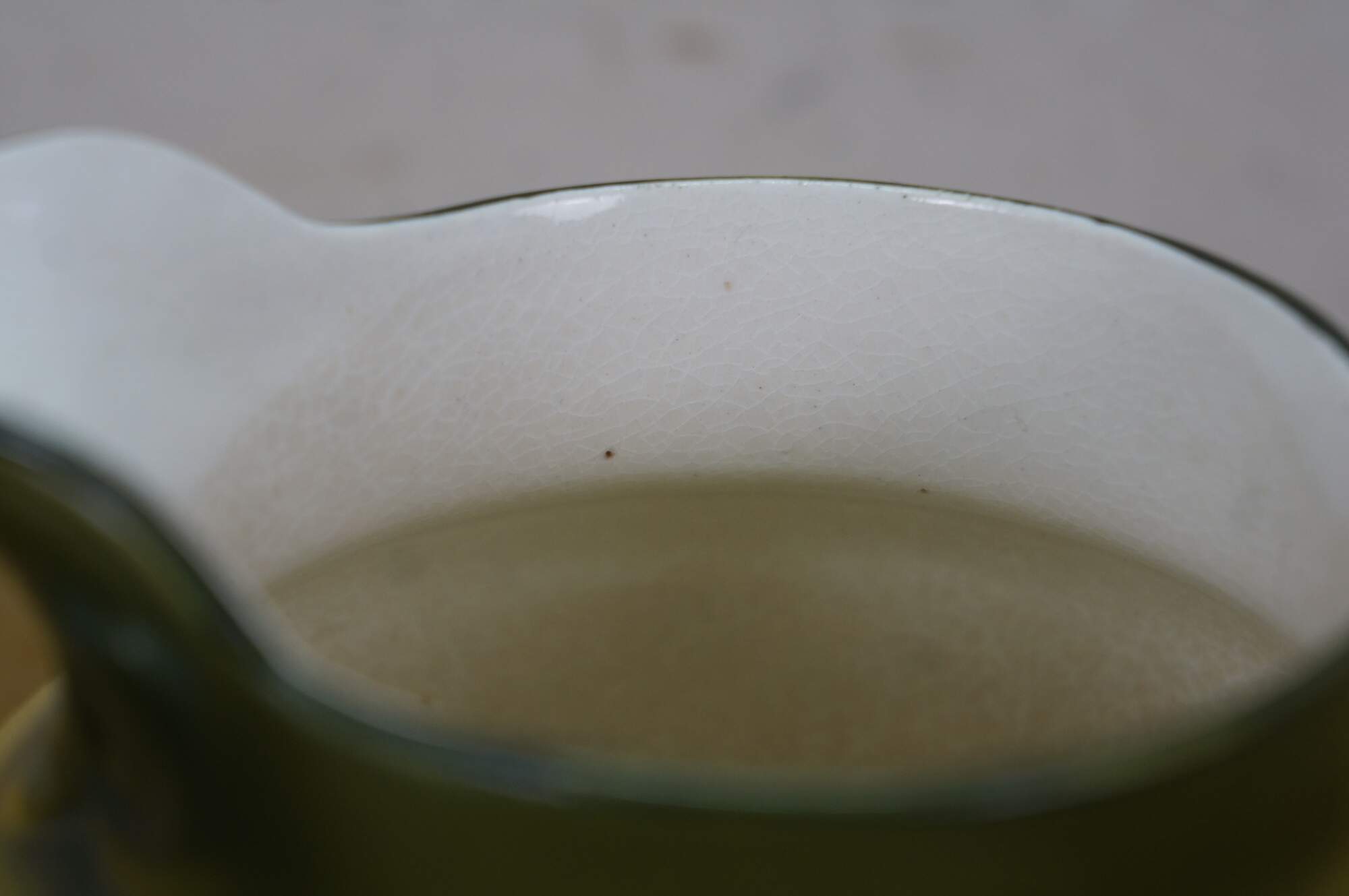
Good Overall - Crazing; couple of chips to paint
Dimensions
6.5" x 5.5" x 5.25" (Width x Depth x Height)